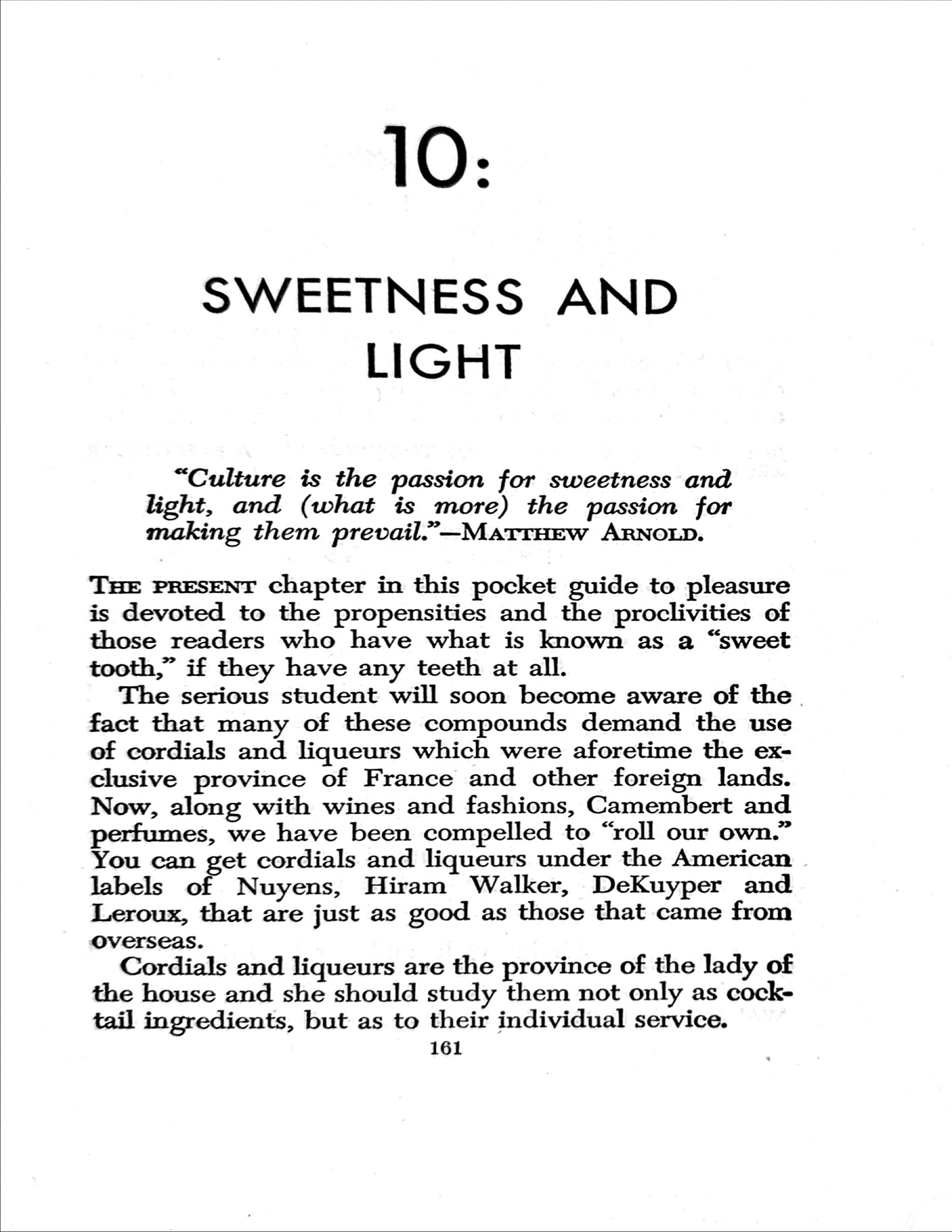
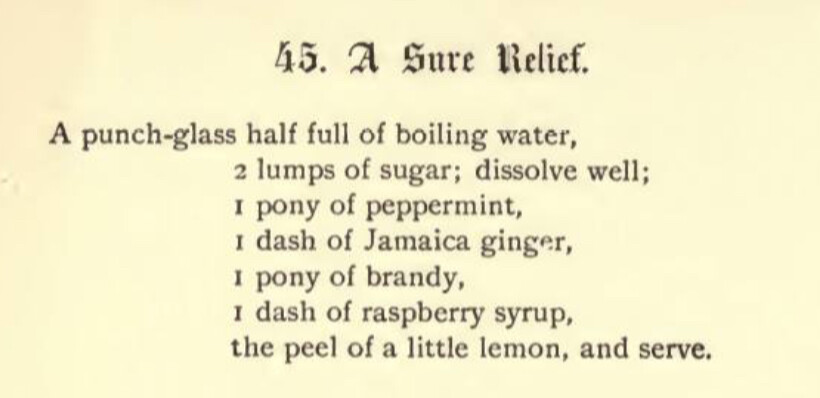
William calls for “creme de menthe” a half dozen times, but not here, and there’s also the “Brandy Rose” which calls for a “1/2 dash peppermint cordial.” Should both of these should be interpreted as peppermint oil or essence? On that topic, here’s an interesting book (full text) about the economy of peppermint essence in early America.
From what I’ve read so far it seems like “cordial” is a diluted and sugared preparation of “essence.” Anything that goes by “mint cordial” these days tends to be British and quite low ABV. And then you’ve got the story around peppermint schnapps that it was invented by a Minnesota liquor rep who saw customers dropping peppermint candies in their booze. Plenty to untangle.
I would think that peppermint essence, itself a solution of peppermint oil, is still far too concentrated to be potable (as well as expensive to fling around), and you’d just use small quantities of that to produce a potable peppermint water or peppermint cordial medicine.
I think the critical question here is what was readily available in New York City in ~1890 either in a commercial package or a pharmacy prep that was commonly at-hand.
My guess is that the “peppermint” in the above recipe is just shorthand for the same “peppermint cordial” referenced in the Brandy Rose.
I’m on Chapter 7; hopefully we get to 1891 by the end of the book But DO NOT read it if you have any fondness for Hiram G. Hotchkiss, the self-proclaimed Peppermint King, and inspiration behind Peppermint Days in Lyons, New York, because this is a BRUTAL TAKEDOWN. Peppermint tea, indeed.
Rose’s Lime Juice is a cordial—in the UK, it’s labeled as a cordial. I’ve always understood cordials to be a more concentrated sort of fruit juice with lots of sugar in it (I make my own lime cordial that way—I boil down a lot of lime juice to 1/2 its original volume, then steep the limes’ zest in it for a few minutes, then add an equal volume of sugar)— or as in the BBC’s elderflower cordial recipe, you’d make a syrup and steep the elderflowers in it for a while. Lots of similar recipes include citric acid as a preservative. The BBC’s Mary Berry makes it using “Campden tablets,” which I’d never heard of before today!
But they’re all meant to be mixed with something diluting: water, or sparkling water, or still or sparkling wine. I’ve got some delicious Slovenian “elderflower syrup” which is great in a glass of some boring or 2 day old white wine, or some prosecco etc.—it’s a bit more viscous/sugary than IKEA’s excellent “elderflower drink concentrate”, which is referred to as a cordial here and there online.
Having noted all that…I’d say peppermint cordial is just a species of peppermint syrup. And I’ve just confirmed it by finding Schweppes Peppermint Cordial for sale on Tesco’s site: 1L for 2.80GBP! I see the cordials are categorized with the lemon and orange squashes (another kind of fruit drink concentrate).
My guess is that you’re right about the “peppermint cordial” being something like a syrup in the Schmidt recipe—possibly something produced by a pharmacy or like something a pharmacy might produce. However, we have this problem in the United States with the word “cordial” referring to a liqueur, whether medicinal or not. The Oxford details the schism but doesn’t get into dates. Anyway, we’ve long made a gray area of all things medicinal and recreational.
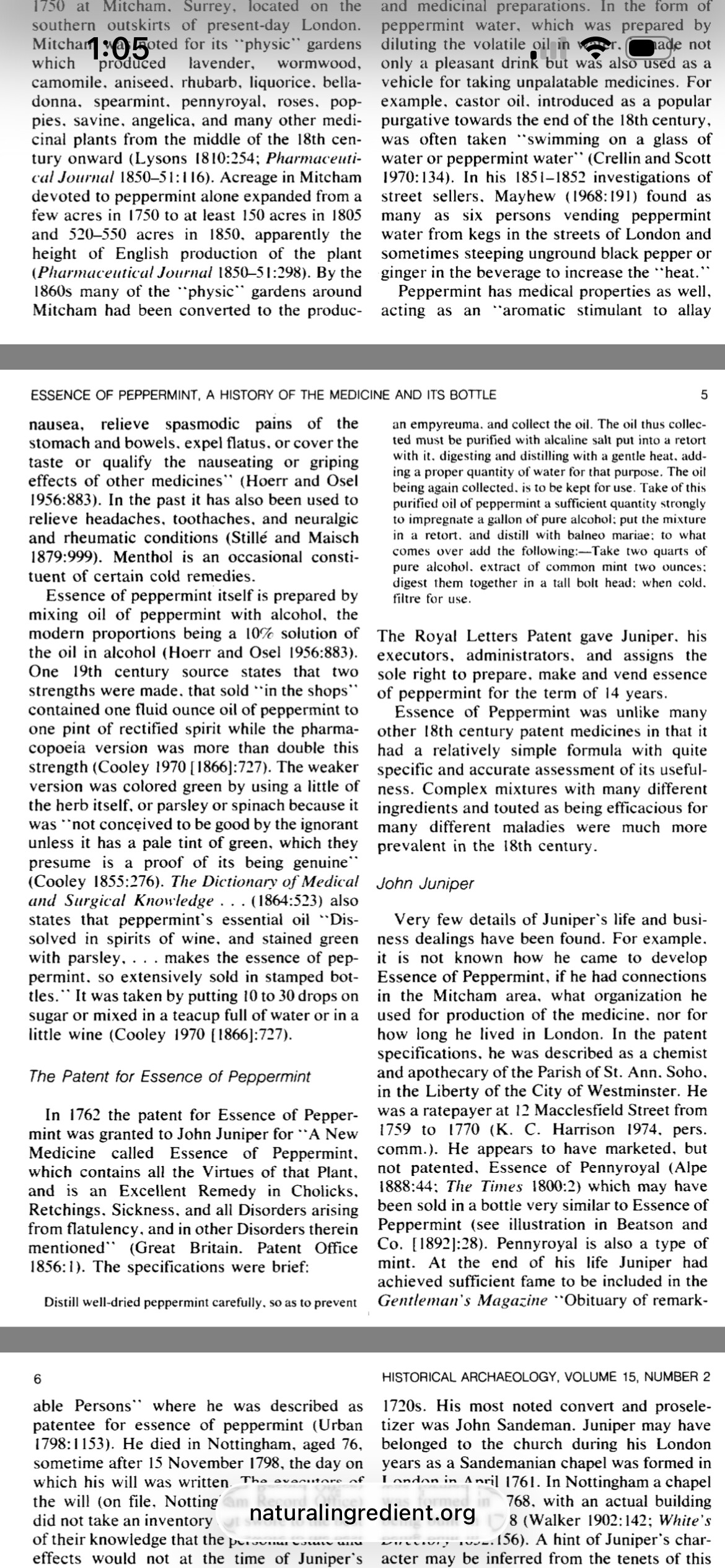
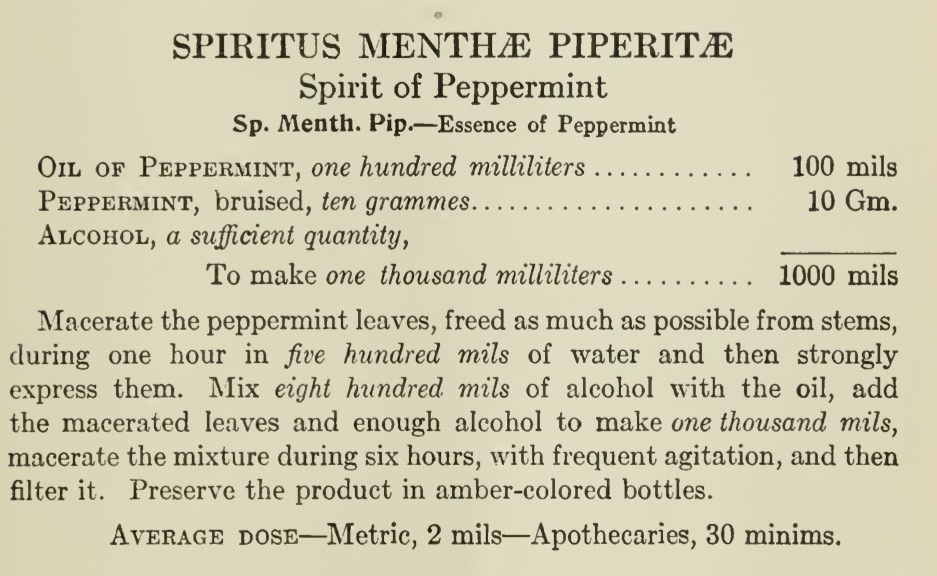
Apparently essence of peppermint became a pretty uniform patent medicine product after John Juniper’s original British patent in 1762. It seems to have come invariably in squared off 1/2 oz glass vials which were immediately recognizable to consumers. I’ll post one screenshot of the article which covers the production of peppermint oil and the composition of peppermint essence in some detail, but my takeaway is that 1) William Schmidt’s “one pony of peppermint” may well have been a 1/2 oz container of peppermint essence, 2) such peppermint essence was 5~10% peppermint essential oil diluted in rectified spirit, for which 3) contemporary peppermint extract unmixed or diluted by half should be a good substitute.
 But DO NOT read it if you have any fondness for Hiram G. Hotchkiss, the self-proclaimed Peppermint King, and inspiration behind Peppermint Days in Lyons, New York, because this is a BRUTAL TAKEDOWN. Peppermint tea, indeed.