I recently acquired a 1936 cocktail menu from a bar in Wisconsin that had a lengthy list of 11-17YO bourbons for sale that had been aging throughout Prohibition. It seemed highly unusual to me. Has anyone ever seen that before on a post-Prohibition menu?
3 Likes
Perhaps they had connections to George Remus?
According to this article, NO beverage alcohol was legally produced in the US between 1918 and 1928. Distilleries were allowed to bottle and sell from existing stock 1918-1920, and then the six that obtained medicinal sale licenses were allowed to start producing to replenish their stock in 1928. So it would seem that immediately post-Prohibition bourbon would have been aged either shorter or longer than that 11-17 year window.
1 Like
The owner of the bar certainly had connections in the bourbon biz.
You do see pre-Prohibition whiskeys on some menus in the early days after Repeal. Here, for instance, is the relevant section from the Hotel New Yorker’s list, midd-1930s:
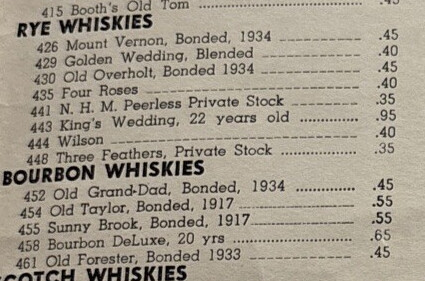
By the end of the ‘30s these were rare, both because the extensive stocks available in 1934 had been drawn down (mostly for blending), and because most of those pre-Pro hiskeys were just too woody for pleasant drinking. That’s certainly been my experience with the ones I’ve tasted. The New Yorker could offer bonded Overholt and Mount Vernon because they were owned by one of the six companies (not distilleries) that was allowed to replenish its stocks of medicinal whiskey in 1928.
6 Likes