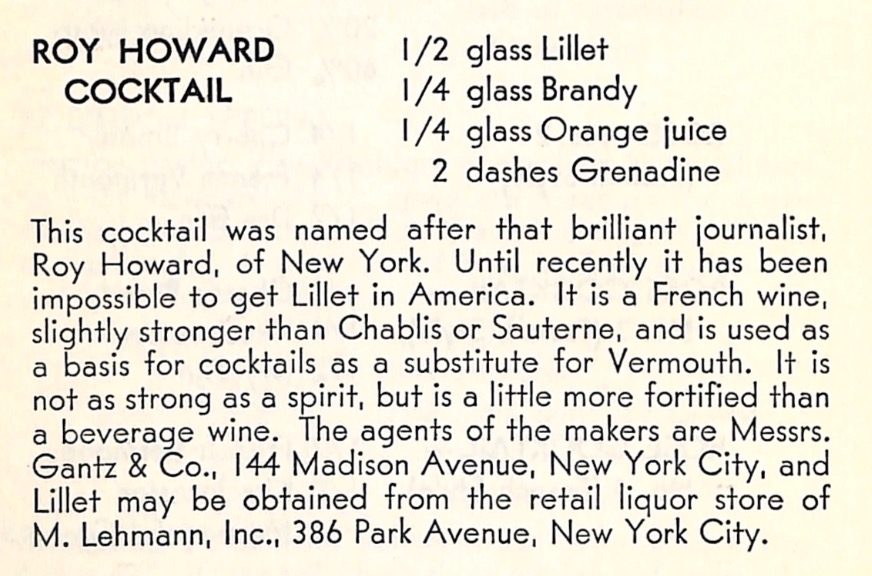
Just sharing this obscure recipe from an obscure book (Steele’s 1934 My New Cocktail Book) for the Lillet note:
5 Likes
(386 Park Avenue is now Lever House, BTW.)
1 Like
Looking forward reading your writing 
1 Like
M. Lehmann Inc. was evidently the predecessor to the venerable-and-now-disgraced Sherry-Lehmann. I went down a very confusing, un-definitive Internet rabbit hole on this: the “Sherry” part seems to tie indirectly back to Louis Sherry and his famous Sherry’s restaurant (pre-Prohibition), and directly back to a posthumous, post-Prohibition confectionery in his company’s own building at 59th and Park. At some point the confectionery moved across Park Ave, morphed in to a liquor store, merged with M. Lehmann Inc. to become Sherry-Lehmann, and operated as an upper east side icon until it imploded a couple years ago as various criminal shenanigans came home to roost.
2 Likes
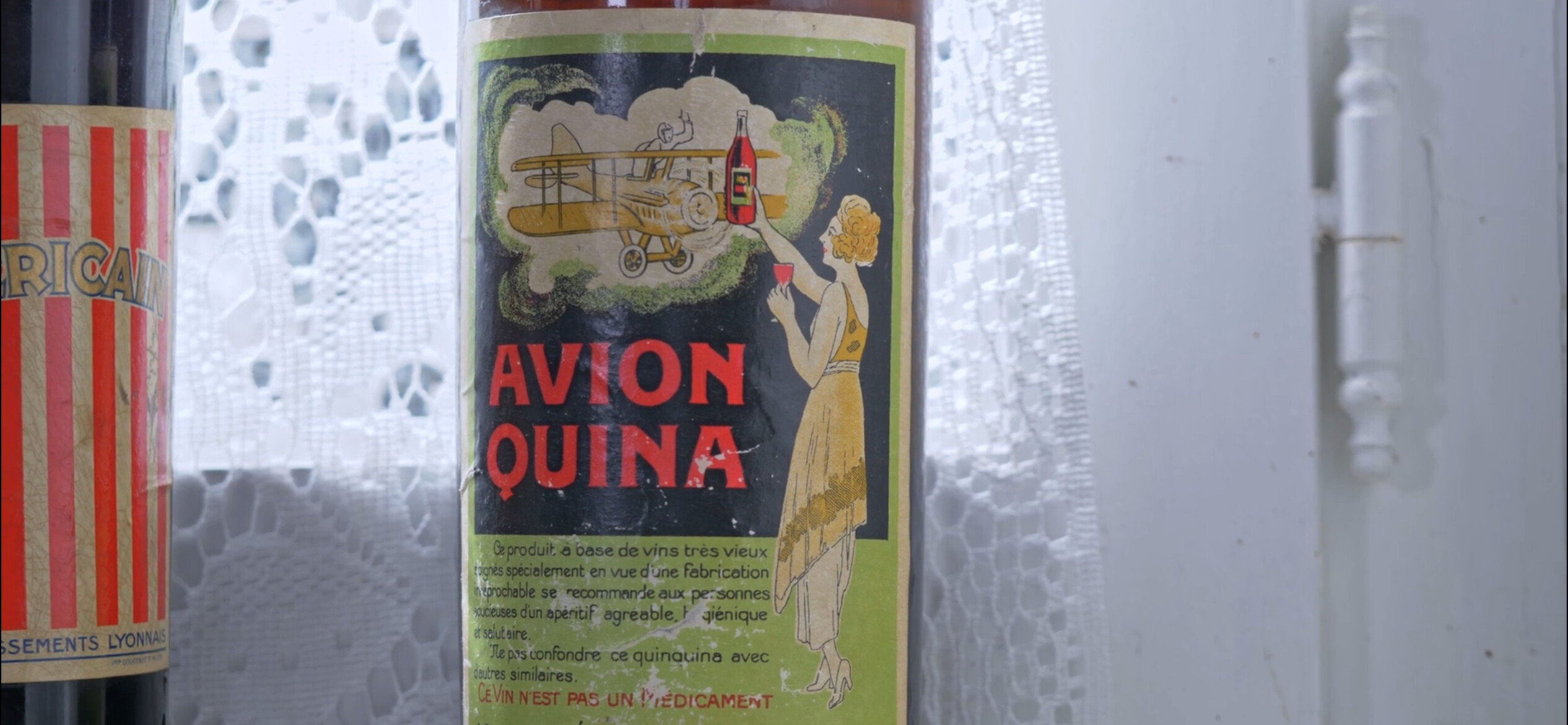
Doing a Lillet-centric tasting in Detroit next week, but here’s a question about Kina L’Aero d’Or: if you look on the Tempus Fugit website, you will notice they suggest using L’Aero in cocktails like Corpse Reviver, 20th Century etc that call for Lillet. However, they state this is a “regional Alps-Provence style” aperitif, rather than Bordelais/Gironde as Lillet is. Obviously one must be cagey about trademarks that are still owned by conglomerates, but what are the historical antecedents of this product, other than Lillet?
You mean antecedents beyond Peter Schaf pulling it out of his behind? I suppose it is a quinquina?
2 Likes
I’m not aware of a “regional Alps-Provence style” for quinquinas but, obviously, in the second half of the 19th century distilleries all over the country were making their own versions and Peter and team may have based their recipe on something from the region.
Or maybe they’re nodding to St Rahpaël and Dubonnet? The former is from Lyon (close enough to the Alps) and was later produced in Sète (not Provence, but, I guess, close enough too). Dubonnet, while a Parisian product, has links to Savoy (so Alps).
Joseph Dubonnet was not a doctor or a chemist, as usually claimed. He was a wine merchant based in Paris but born in Savoy. He was the first distributor in Paris of a renowned Alpine product: Chartreuse. It’s not quite clear whether he actually invented the Quinquina Dubonnet . There’s zero mention of the product until after his death in 1871. He left his sons a very healthy business and they were the ones who created a secondary company to sell the quinquina. They may have inherited the recipe form their Savoyard father or they developed it themselves. In any case it would be a stretch to call this alpine.
Going back to Lillet, the product is actually a late comer to the quinquina category, which makes it sort of weird to use old school mid-19th century recipe as a proxy for the supposedly original Lillet, as some producers do.
5 Likes
Hence, the recommendation to use Kina L’Aero d’Or in place of Lillet in drinks like the Corpse Reviver and 20th Century is probably parallel to the recommendations to use Cocchi Americano the same way. It’s functional, and you may or may not prefer it.
2 Likes
Answering my own question via @armin
The Kina L’Aéro d’Or is made for Tempus Fugit by Oliver Matter and reflects the style of the French Maritime Alps. It is based on a recipe by his great-grandfather and company founder Ernst Luginbühl-Bögli.
2 Likes
A little transparency could go a long way.
1 Like