Banana Daiquiri

For some God forsaken reason, I’ve found myself looking into the history of the Banana Daiquiri (blended or otherwise) and scrutinizing the veracity of the various claims of various inventors.

1: George Soule, Mountaintop, St. Thomas, U.S. Virgin Islands, ca. 1953. The most widely cited invention story but reads like a load of malarkey to me. A bunch of articles copying the story from the Mountaintop website.

2: Harry K. Yee, Henry Kaiser’s Hawaiian Village Hotel in Waikiki, Oahu, Hawaii, ca. 1950s. Less common but several sources such as Rick Carroll attribute the drink to Yee.

3: The Varadero International, Varadero Beach, Cuba, ca. 1954. Earliest written mention of a Banana Daiquiri I’ve been able to find thus far, “Varadero Beach Is West Indies", Boston Herald, December 5, 1954, sec. 4, 14. Courtesy of the Oxford Companion.

4: Manual de Cocteleria (1959) features a Banana Daiquiri.
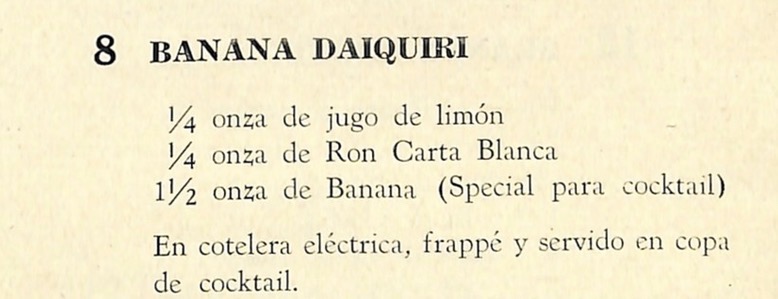
There’s a good chance I just need some sleep but the “1 1/2 oz Banana (special for cocktail)” has me wondering if they’re indicating an actual banana or a banana liqueur. Any insight here would be much appreciated.

Actually, if anyone has any more nuggets of info about the drink’s history, I’d love to hear about it. For now, I’m gonna try to see if I can find some menus from the 50s.
2 Likes

Interesting challenge. Regarding the #4, I’m pretty confident that “Banana (Special para cocktail)” means “crème de banana”, which was available in Cuba from at least 1940. One clue is the proportions. Moreover, if this Spanish language recipe book had intended an actual banana, they might have written “plátano” or “guineo”. Or perhaps “banana” without capitalization.

Generally, I suspect that the banana daiquiri stems from a broader cultural fashion for viscous blended drinks, perhaps triggered by the success of the Piña Colada (1954) or in concert. It’s an obvious move for anyone inspired to explore. Meanwhile, it’s hard for me to imagine someone like Constantino adding bananas to his daiquiris in the 20s–40s. Wrong era.

2 Likes

Many thanks @martin , I also was leaning toward it being a banana liqueur. Which is interesting because that means the earliest recipe I know of for a Banana Daiquiri doesn’t have actual banana in it, but it’s still served frappé. Is there a recipe from 40s Cuba that also features a banana liqueur?

It is suspicious that the first three sources all come from the early 50s, adding weight to your hypothesis that they might’ve co-evolved with the Piña Colada. But more time around blenders means that people will start chucking more and more things into them.

Obviously, the Europeans were putting banana liqueur in drinks far earlier.

Despite the common flavor, I’m speculating that there’s initially something of a divide between crème de banana (initially probably a European import) for the bar, and that particular piece of fruit making its way into the bar. At least in Cuba. And even though banana liqueur was available, there’s not much evidence of either actually winding up in any Cuban drinks.

The earliest reference to crème de banana I’ve found in a far-from-exhaustive search of the Cuban lit is in the 1939 Sloppy Joe’s book, but it’s just a bottle, not something employed in a mixed drink. In the 1948 Sanchez book, there’s an advert for a Cuban company actually making the stuff locally (as well as the other usual liqueurs). There must have been some demand. Tourists, perhaps?

That 1959 Cuban book is the earliest example I’ve found of banana anything in a Cuban drink. Always possible I have overlooked something, though. Seems like a rational drink, although maybe not a great one. It sort of reads to me not as the ur Banana Daiquiri, but as a rational attempt to honor a customer request for a “banana daiquiri”.

Largely irrelevant, but there are a couple drinks in Pichín’s 1955 Tragos Magicos (Argentina) that call for mashed up bananas. Neither are remotely Banana Daiquiris, of course. They’re more like batidas, which probably involved bananas early on but also probably stayed largely isolated within their South American boundaries. I am not a batida expert. Additional Pichín recipes call for banana liqueur.


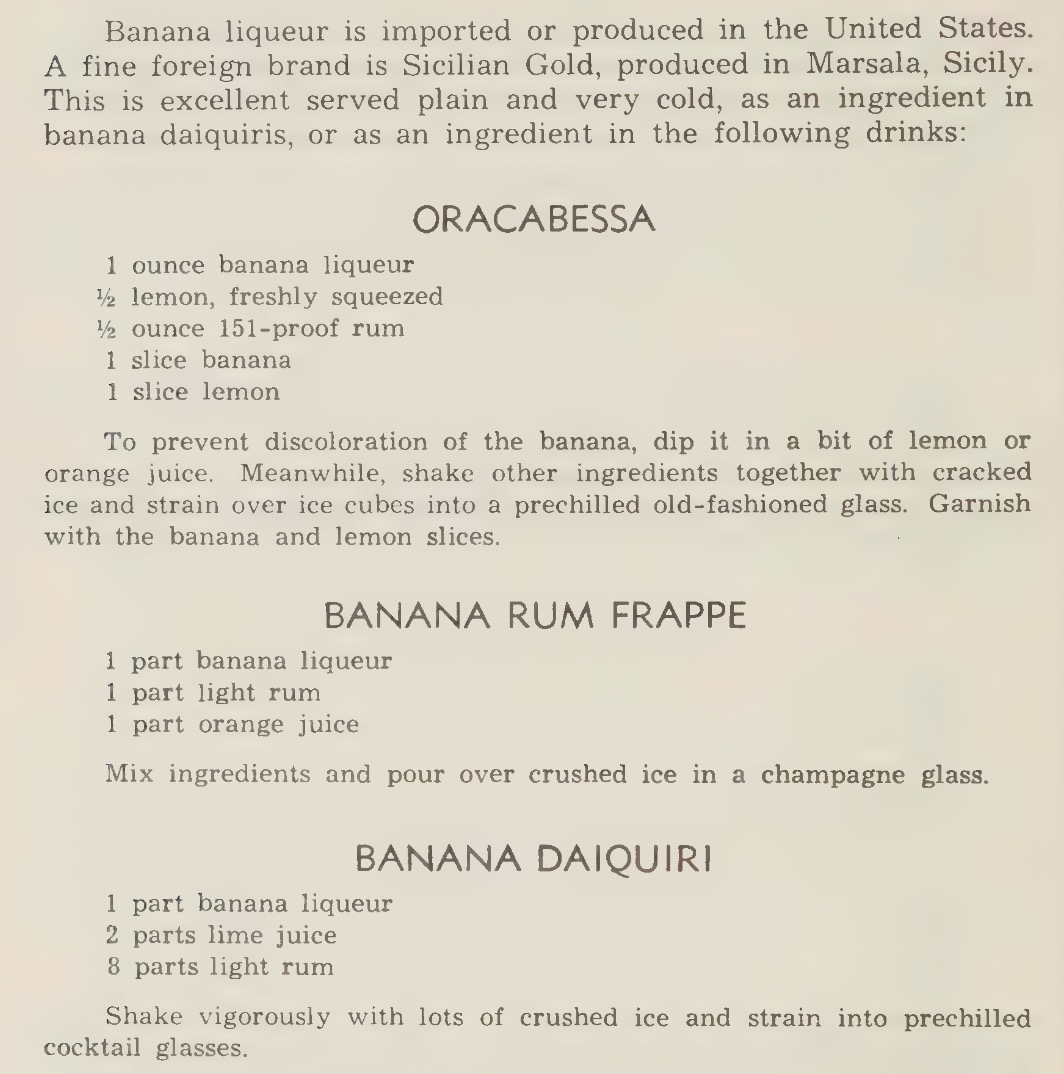
This is from the 1973 Jack D. L. Holmes book “New Orleans Drinks and How to Mix Them”. Much later, obviously, but maybe helps provide a through-line for the liqueur branch of the Banana Daiquiri.


Another drink that may factor in is the Banana Cow. It’s a batida, which Baker attributes to Colombia (I’d take that with a grain of salt, as the earlier banana-free Rum Cow seems attributable to Don, circa 1937). Trader Vic publishes a simplified version of the Rum Cow in 1946 and it seems to stick. Interestingly, the Rum Cow appears (amongst other places) in Saucier’s 1962 book, but not the Banana Daiquiri. Anyway, the Banana Cow unquestionably has a mashed up banana in it whereas it’s looking like the Banana Daiquiri has two through lines: the liqueur approach and the blended banana approach.

2 Likes

Note the specimen made in Havana dated to 1951.

More bottles to page through starting here:

https://vieux-alcools-bistrot.fr/collection.php?categorie=105&categorie_parent=3

3 Likes

Thank you for sharing that. I imagine at Banana (special para cocktail)/crème de Banane vs. Platano Cremas might provide insight into where the liqueur was produced in future research.

Those two through lines may contribute to the Hardy-Weinbergesque multiple invention scenario. One school using the liqueur and the other fresh bananas until they finally collide at some point. Then it becomes three branches, liqueur, fruit/liqueur, and just fruit.

What know for sure is that both schools were blending the Banana Daiquiri. The Holmes recipe looks incredibly tart but also reads like more like if someone pre-1930 had taken a spin at the Banana Daiquiri. Or someone from the past 26 years because there’s tons of shaken recipes on line. They vary loosely in ingredients, many contain aged or caramel colored rums and a bit of syrup for balance. There’s also the muddled fresh banana and shaken version. But as far I know, I’m the only one who’s been dumb enough to try that.

1 Like

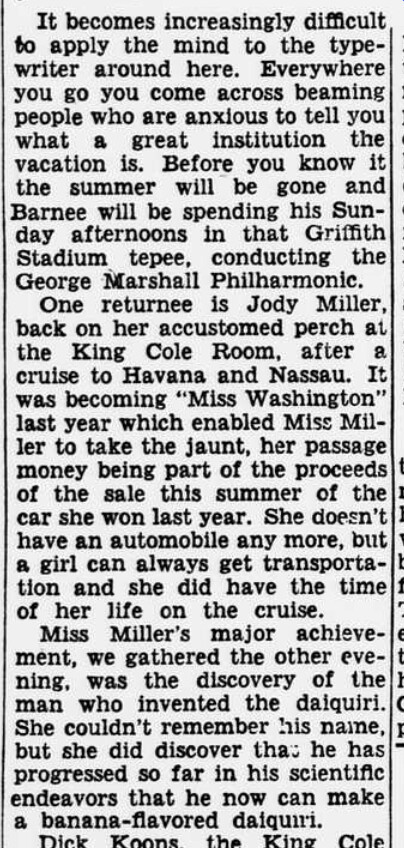
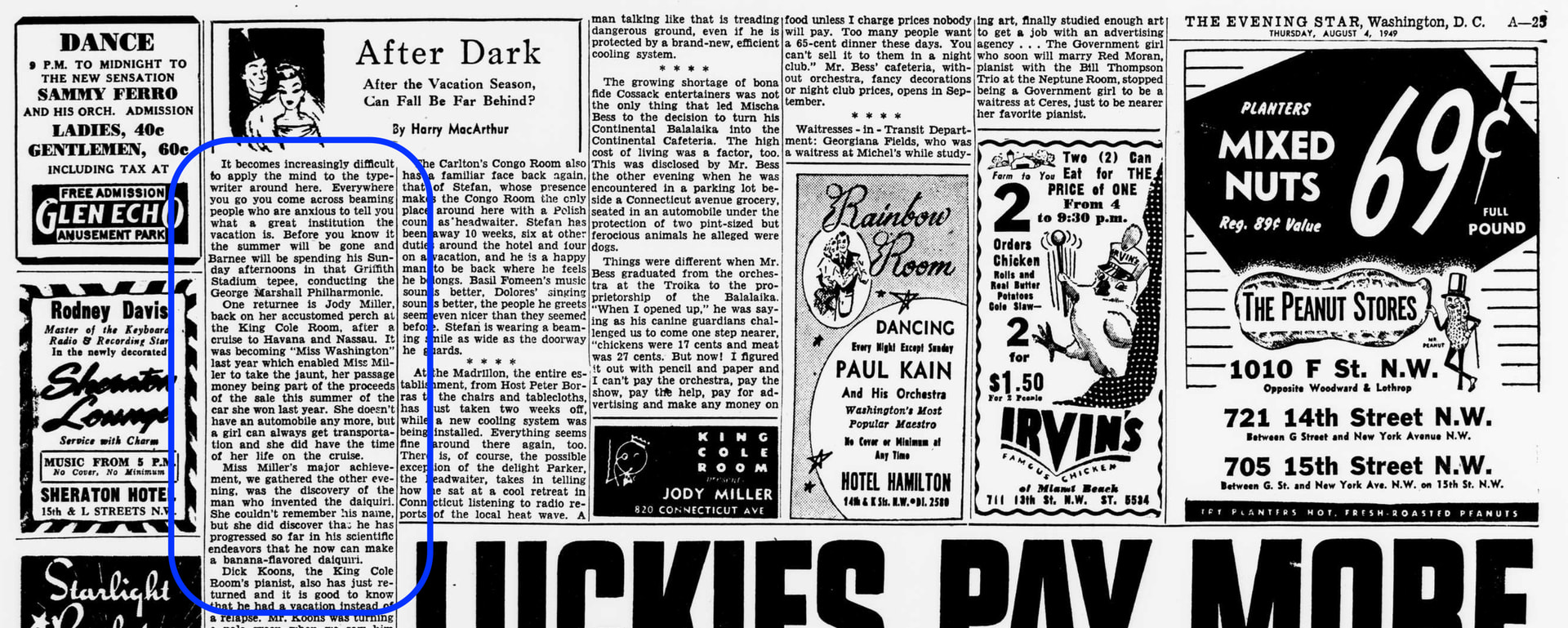
The earliest mention I have in my notes is from 1949 (The Evening Star, Washington DC, August 4th 1949) and without naming him, refers to Constate Ribalaigua.

Interesting to see the use of liqueur instead of available local fresh fruit (was it to maintain the usual texture enjoyed in Cuba ?) - thanks for the cuban banana liqueur @martin !

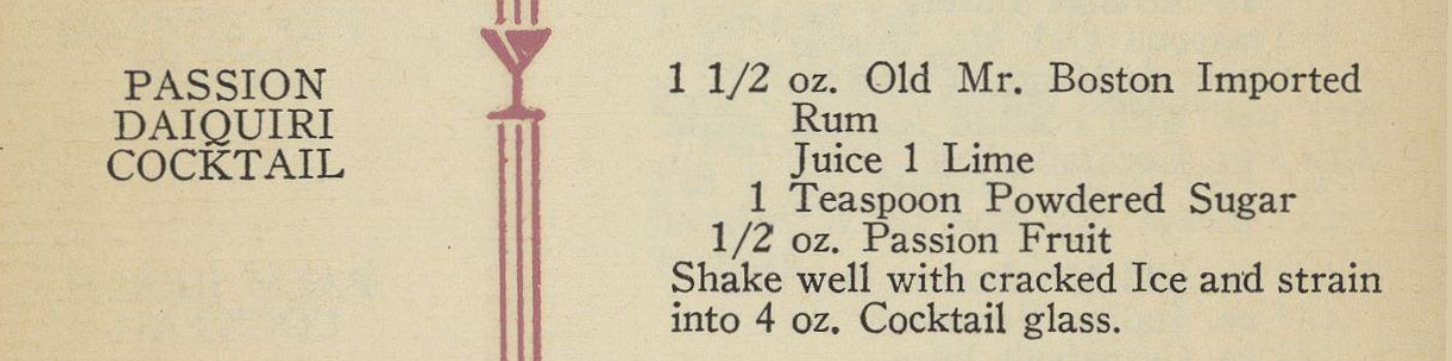
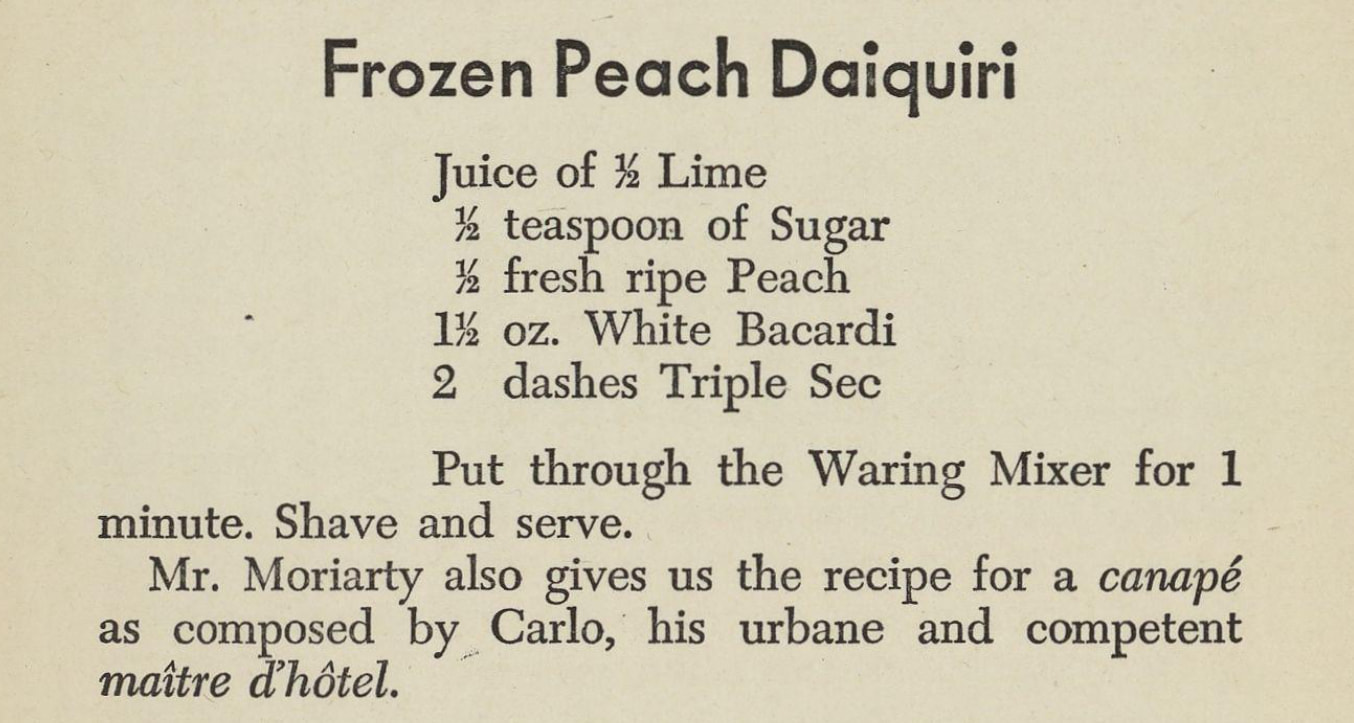
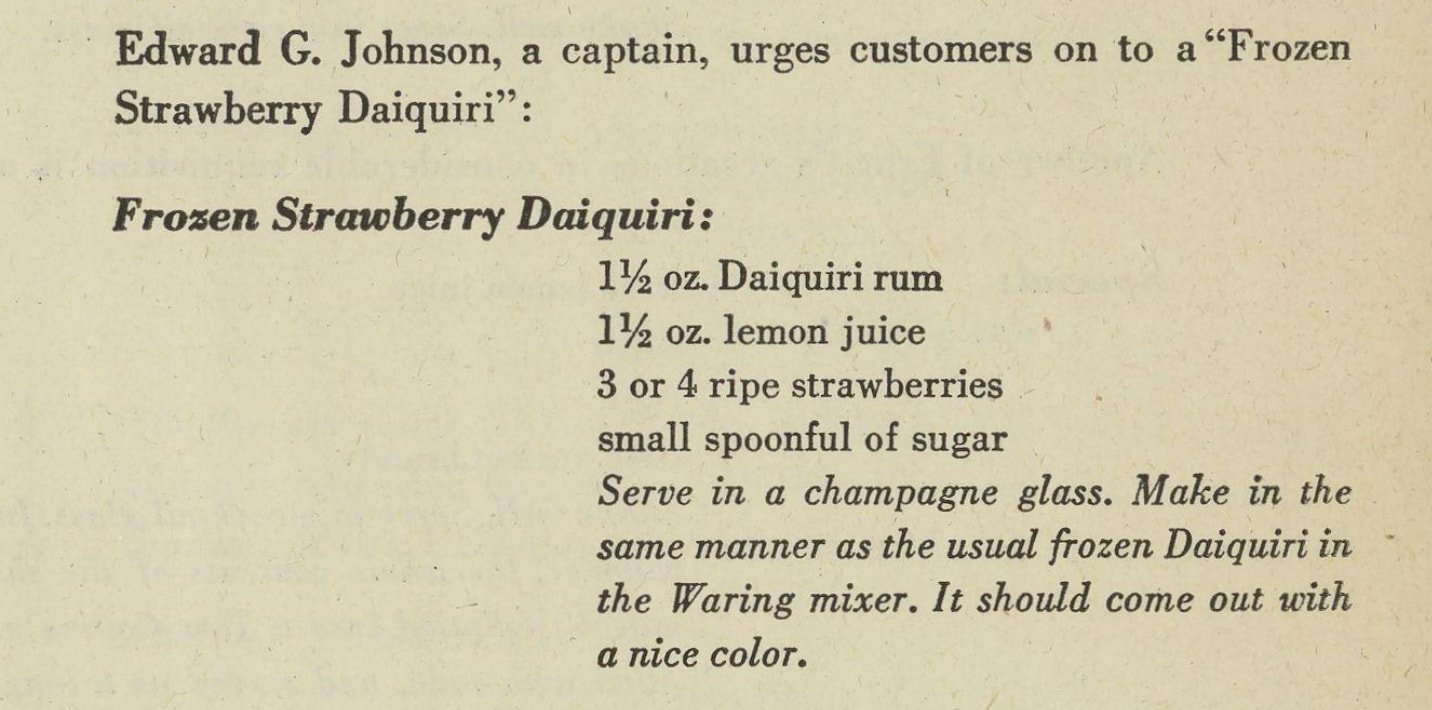
In the U.S. it seems natural fruits were preferred to liqueurs for Fruits Daiquiris
Passion Daiquiri (1940 - Old Mr. Boston - “passion fruit juice” mentioned in the Zombie recipe)

Peach Daiquiri (1941 - Crosby Gaige’s Cocktail Guide and Ladies’ Companion)

Strawberry Daiquiri (1946 - Stork Club Bar Book)

2 Likes

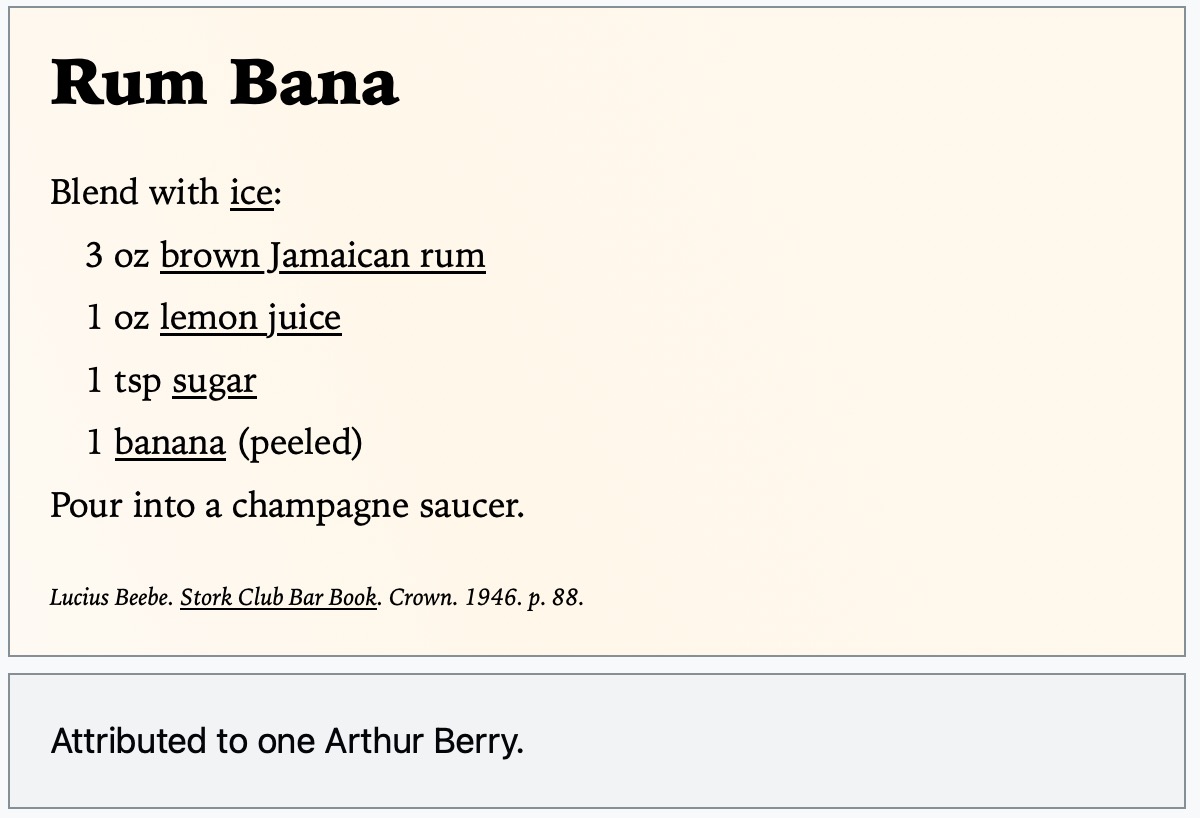
Well, what do we make of this?

2 Likes

Good example about the complexity to determine when a recipe fits in “original formula” or “variation” attribution.

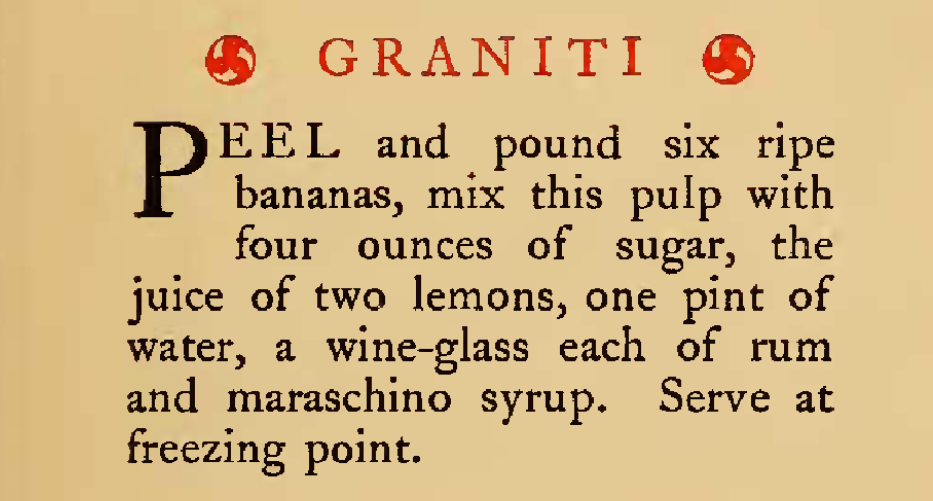
What about this one, in the same vein from 1904 (One Hundred Beverages, p.57)

3 Likes

Graniti, eh? Sounds like something adapted from a limonadier’s recipe book?

Wow, that Graniti recipe predates the rest by a fair amount and really is a banana daiquiri in everything but name. Some mid-century recipes call for maraschino which makes this even more interesting.

I’ve done some more digging using Google Ngram but that put me at a dead end. Here’s where I’m at working from youngest to (possibly) oldest references that aren’t already mentioned.

  1. Church, Ruth Ellen. Mary Meade’s Magic Recipes for the Electric Blender. United States: Bobbs-Merrill Company, Incorporated, 1956. This is a blender focused cookbook, very 50s in feel but it does include a recipe for a frozen fresh banana daiquiri.
  2. Stamps Article (1954). This one is the oldest reference to the Soule/Mountaintop story and it appears to be contemporary with the Varadero Hotel story. So that’s still rather unclear.
  3. Liquor Store and Dispenser magazine article (1939?). This is maybe the oldest reference to a banana daiquiri by name. However, I can’t see anymore of this article nor confirm the publishing date. Google doesn’t offer anymore and I can’t find this specific issue in any internet database. There may be copies of this issue at the Library of Congress or the NY Public Library, neither available digitally. So… any NYC or DC resident feel like doing some archive digging?

Lastly, I couldn’t really find anything to support the Harry Yee theory but if anyone has access to old Hawaiian Village Hotel menus ca. 1952 please let me know.

2 Likes

Cocktail history is always full of surprises!
And we always have to be careful about interpreting things…

This Graniti can’t be considered as a Daiquiri (even if very similar), because it might predate it (and lemons, 4th ingredient, different method…).

Good list of potential new sources!

1 Like

@fernando I agree that it’s not a daiquiri. I do still think it’s a case of convergent evolution, like therapsids and sabertooth tigers both having those intimidating saber-teeth. Different in origin but notably similar. If one adheres to the Cox narrative for the Daiquiri’s creation ca. 1898, then the “proper” Daiquiri already existed. However, accounts of that narrative do state that Jennings S. Cox Jr. did swizzle/stir the drink with crushed ice.

Nevertheless, to me at least, it does serve as a point on the timeline where we can see:

  1. Fresh banana in alcoholic mixed drinks.
  2. Rum + bananas

I think it contributes to the overall picture postulated by @martin earlier of a collections of individuals, possibly independently, coming to the conclusion that banana + booze or specifically banana + rum + citrus is worth drinking, making, and selling.

And thank you. I’m still searching for more references but we’ll see if that turns up anything.

1 Like

@CurrerBachman , I agree with you about the banana + rum + citrus combo

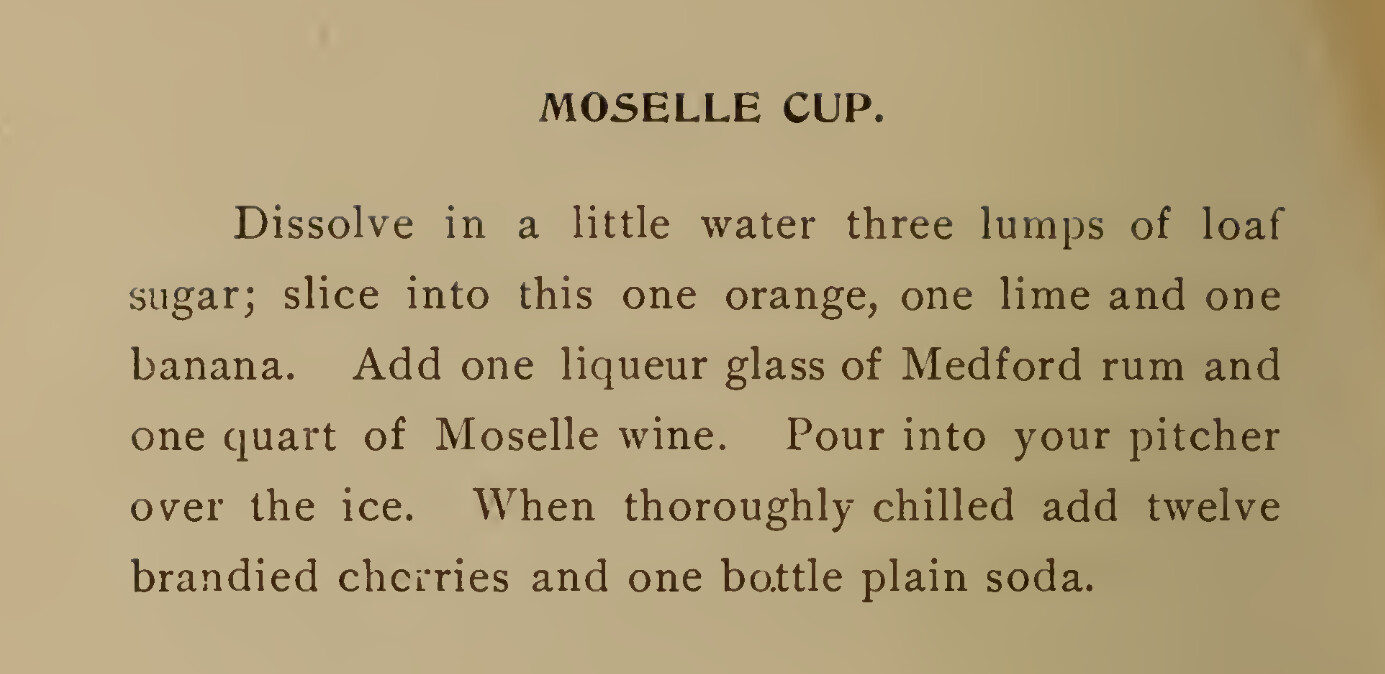
Here is another one, with even more ingredients, from 1893 (Beverages and Sandwiches for your husband friends - by one who knows)