Techniques & Theory Books on Food & Drinks

I was unable to find another thread for this so starting this one. Apologies if it’s duplicated elsewhere but I don’t believe this fits into any of the canon discussions.

What is believed to be the most influential books, old and new, on the techniques of the food & drinks trade? I believe collecting these could be quite interesting as a reference guide for future industry learning and training materials.

I believe the major formal works defining not just recipes but techniques begins with Harry Johnson on the drinks side (1882, New and Improved Bartender’s Manual) and Auguste Escoffier on the food side (1903, Le Guide Culinaire), but I must admit I am unsure of this.

To start off the list, I’ll add these to get the ball rolling. I appreciate some of these are strictly cooking science while others are more hospitality manual styles.

  • 1976 - Jacques Pépin - La Technique
  • 1984 - Harold McGee - On Food & Cooking (Revised in 2004)
  • 2002 - Dale DeGroff - The Craft of the Cocktail (Revised in 2020)
  • 2003 - Gary Regan - Joy of Mixology
  • 2010 - Darcy O’Neill - Fix The Pumps
  • 2011 - Nathan Myhrvold - Modernist Cuisine
  • 2012 - Sandor Katz - The Art of Fermentation
  • 2012 - Tony Conigliaro - Drinks
  • 2013 - Kevin Liu - Craft Cocktails at Home
  • 2014 - Dave Arnold - Liquid Intelligence
  • 2014 - Jeffrey Morgenthaler - The Bar Book
  • 2014 - Alex Day, David Kaplan, Nick Fauchald - Death & Co Book
  • 2017 - Matt Whiley - The Modern Cocktail
  • 2017 - Samin Nosrat - Salt, Fat, Acid, Heat
  • 2017 - Jim Meehan - Meehan’s Bartender Manual
  • 2018 - Aaron Goldfarb - Hacking Whiskey
  • 2018 - Alex Day, David Kaplan, Nick Fauchald - Cocktail Codex
  • 2018 - Grant Achatz - The Aviary Cocktail Book
  • 2022 - Toby Maloney - The Bartender’s Manifesto
  • 2023 - Camper English - The Ice Book
  • 2023 - Kevin Peterson - Cocktail Theory
  • 2024 - Arielle Johnson - Flavorama
  • 2024 - Bart Miedeksza, Valentino Girotto - Bubbles: A Guide to Carbonated Cocktails

I am aware this is equally as opinionated as the “right way” to make a Martini, and it suffers from the same boundary paradox of what does and doesn’t qualify, but collecting these somewhere would certainly be beneficial.

With such a broad scope, there would be a great big mountain of them on the food side stretching back at least to the 17th Century, and it will quickly surpass the scope of this forum. However, some of those older cookbooks are actually quite relevant here because they offer essential information on various beverages of the era, such as possets and remedies. We have already captured at least some of the latter on this thread.

The world of wine has its own great big pile of literature with which I am largely unfamiliar—almost entirely out of scope, here.

“Influential”, “theory” and “technique” are all a little loaded. For example, Johnson mainly wrote about operating and managing a bar (theory?), although there’s some technique sprinkled in there for handling beverages, mixed or not. Exactly how influential he was is—in his era—is something @Splificator has questioned. Obviously, he’s considered quite important to us now. The Hoffman House guides cover some similar territory starting in… 1903? Kappeler (1895) has been hugely important (at least retroactively) for understanding 19th Century mixology by spelling a lot of things out in prose. In terms of mixed drinks theory, David Embury (1948) obviously has to be added to your list. Jeff Berry’s books have to go on such a list, along with the Smuggler’s Cove book. Again, scope is problematic here. How low is the bar for “theory” and “technique”? If you allow Johnson, then why not Trader Vic?

There are some non-English language books that probably belong on the bar side. I’m not sure which, offhand, but some of the early bar books (Lefeuvre?) make some attempt to explain what the hell is going on and what the result is supposed to resemble.

1 Like

I think you are right, the scope here is terribly defined. My apologies!

On second thought, I guess I’m looking more for explicit technique discussions such as the shaking, stirring, throwing, blending, etc. of a drink or the combining, blending, vac packing and sous vide cooking of prep along with maybe some chemistry explainers behind it.

Johnson’s guide is mostly bar management, so not suitable for the list on second thought.

Trader Vic’s bartender guide does briefly discuss differences in shaking and stirring but I wouldn’t say it qualifies either.

As much as I dislike Embury, I do think that his work deserves to be on the list as he shares his opinions on the methods quite well.

The context here is that I’m working on a simplified view of methods and techniques to display it elegantly within my app with a longer view on making it easier to understand and grasp for new members of the industry. Essentially I want to get away from the highly verbose recipes that seems to be the norm today with many in-line notes on ingredients adding unnecessary noise…

I have hundreds of prep notes in the app from bars already that I’m trying to boil down to common usage terms for standardising so wanted to isolate how it’s historically grown from mixing liquids and fruits in punch bowls through to shaking, straining, icing and now using rotovaps, centrifuges and vacuum blenders for prep.

Not sure where it ranks on the important/historical scale, but Toby Maloney’s The Bartender’s Manifesto is a book structured around techniques, and explains them straightforwardly with a fair amount of depth.

2 Likes

I have a technique section of my bookshelf that includes:
Fix the Pumps by Darcy O’neil

Craft Cocktails at Home by Kevin Liu

Hacking Whiskey by Aaron Goldfarb

Cocktail Theory by Kevin Peterson

The Aviary

2 Likes

All excellent suggestions so I’ve updated the list.

Also added The Ice Book. Not sure how I forgot that! :wink:

Thanks gang!

1 Like

Early works tended to incorporate technique and theory into the recipes, rather than pulling it aside as something abstract, but there are still works such as The Ice Book, by Thomas Masters (1844) and the superlative La veritable manière de faire le punch, by “Turenne” (1866), that would qualify. Also, steward’s/caterer’s manuals such as “Bacchus & Cordon Bleu’s” New Guide for the Hotel, Bar, Restaurant, Butler & Chef (1885) and Jessup Whitehead’s 1889 Steward’s Handbook present a great deal of information on logistics, with a good deal of technique blended in.

A number of the early bartender’s guides—Harry Johnson’s, of course—offer not a systematic account of the bartender’s techniques, but at least a few pages of tips on the topic. Judging from the work that plagiarized it, “Charles W. Campbell’s” 1867 The American Barkeeper, Jerry Thomas’s lost second book was one of those (1863), as are Theodore Proulx’s 1888 Bartender’s Manual, the 1895 Chapin & Gore Manual by Proulx’s co-worker Harry W. Stiles, John Applegreen’s 1899 Applegreen’s Bar Book and T. W. Bishop’s Bartenders’ Association of America Bartenders’ Manual, from 1913 (those last all were all published in Chicago; hmmm). There are others.

The first book I know to address bar technique systematically is Rund um die Bar, published in 1934 by A. T. Neirath. This book, which could really use an English translation, has chapters on “Allegemeine Arbeitsmethode” (eight pages, with photos), “Die Bargeräte,” ice, garnish, cocktail history and so forth. The recipes do not begin until page 150.

The Europeans made rather a specialty of such works: Otto Blunier’s The Barkeeper’s Golden Book (1935), later editions (there were many) of Pierre Dagouret’s 1923 Le barman universal, J. Sanfeliu Brucart’s El Bar and Harry Schraemli’s Das Grosse Lehrbuch der Bar, both from 1949, and the 1953 UKBG Guide to Drinks are all pretty systematic and discuss technique, if I recall correctly.

But having just turned in a revision of my 2010 book, Punch, I’m also conscious of how much time I spend in that and in Imbibe, its companion-book, discussing technique. While one could argue that drink-mixing technique and the equipment associated changed remarkably little between, say, 1890 and 2010 (discounting the soda gun and the blender), period recipes for things such as 18th-century Punches and early 19th-century Juleps are very difficult to interpret now without an understanding of the techniques in use at the time; any good history covering the drinks of those periods must spend a lot of time on it. I’m just adding this as another way of saying I don’t envy you the task of compiling such a list, which could easily grow to be very large.

6 Likes

I can’t really read German, but I took a stab at Neirath’s Chapter 2. The typography of that book is a hassle, but after spending some minutes correcting the OCR, I ran it through a few different translators. I was pretty disappointed in what Apple’s built-in translation service produced, but I got shockingly good results from Kagi and Google. It’s not perfect, and it would be best if a German-speaker could be enlisted to proof-read it, but not a bad start:

General Information on Mixed Drinks

A “mixed drink” is defined as a new “beverage composition” created by combining several drinks (liqueurs, spirits, etc.) according to specific guidelines.

Mixed drinks are prepared in a bar by a qualified bartender (mixer) and, in individual cases, can be assembled either according to the standard recipe or with variations to suit the guest’s taste.

Internationally recognized mixed drinks that must be prepared according to a standard formula are known as “standard drinks,” as they must always be mixed precisely according to the specified recipe. In this book, “standard drinks” are marked with an asterisk (*) in Part II.

If the composition of a “standard drink” is modified to suit a guest’s taste, great care must be taken not to obscure the drink’s essential character. For instance, if a drink’s main ingredients are gin and vermouth, these must never be replaced by other ingredients that are fundamentally different in nature. Adjusting the drink to a guest’s taste involves only making it drier or sweeter, or stronger or weaker; this is achieved by varying the proportions of the main ingredients: gin (dry), Italian vermouth (semi-sweet), and French vermouth (dry). In this way, it is possible to create many variations of a drink without losing its fundamental character.

Various ingredients (such as spices and bitters) are used in the preparation of mixed drinks, and a guest may sometimes dislike a particular one. Therefore, the guest’s preferences must be taken into account when determining the quantities of these spices and ingredients. This can be done by omitting an ingredient, increasing the dosage, or adding another desired ingredient. The ingredients—primarily Angostura bitters, orange bitters, Pernod, gum syrup (liquid sugar), and various other liqueurs with distinctive flavor profiles—are crucial to the composition of a drink, requiring great precision in measurement. A mere dash of Angostura, for instance, is often enough to significantly alter a drink’s flavor. Furthermore, not everyone enjoys an overly strong drink; consequently, the guest’s preferences should be ascertained in this regard. If a lighter or weaker drink is desired, one can increase the proportion of the lower-alcohol ingredient while reducing the stronger components, or stir the drink with ice for a longer period—though caution is advised here, as melting ice can dilute the beverage. Mixed drinks are categorized into two main groups. The first group comprises all “short” drinks—those served in glasses with a capacity of 1/20 liter (roughly the size of a fortified wine glass) or less—while the second group includes all “long” drinks, served in glasses with a capacity exceeding 1/20 liter. Each of these two main groups encompasses various subgroups into which specific types of drinks are classified.

Each type of drink serves a specific purpose. Within the “cocktail” category, for example, there are drinks best enjoyed before a meal and others better suited for after-dinner consumption. “Cobblers” are ideal for high summer; thanks to their refreshing nature and moderate strength, they are also popular choices for evening social gatherings or for enjoying during dance breaks at balls. “Fizzes” are effervescent, thirst-quenching drinks, whereas the closely related “Sour” represents a concentrated form of the Fizz. “Flips”—prepared with egg and often considered nutritious and pleasant-tasting (and thus favored by ladies)—include some varieties that are even used in invalid diets. Less well-known and rarely requested today are “Slings” and “Fixes”; these drinks date back to a time before artificial mineral waters were in use, when ordinary water was used instead. “Sangarees” are of Indian origin; their distinctive feature is a sprinkling of grated nutmeg over the finished drink. Finally, there are “Toddies,” “Punches,” “Bowls,” “Crustas,” “Daisies,” “Egg Nogs,” “Lemonades,” “Squashes,” and “Half-Lemonades,” all of which will be discussed in detail in other sections.

The categories of drinks mentioned here represent the main types of bar drinks; a selection from each group should always be included on a bar menu.

However, there is also a large number of “mixed drinks” that, due to their composition, do not fit into any of the aforementioned categories. Such drinks are known as “Fancy Drinks.” The English term—which is open to various interpretations—In the context of a beverage, the word “fancy” can be translated as “whim,” “personal preference,” “creative idea,” or “flavor profile.” Thus, a drink that owes its creation to a creative idea, a whim, a personal preference, or a specific flavor profile—and does not fall into the previously mentioned categories—is known as a “fancy drink.”

In recent years, it has become common practice in England to label most “fancy drinks” as “cocktails” as well, provided their composition resembles that of a cocktail. Strictly speaking, however, a drink should only be classified as a cocktail if it consists of spirits and fortified wines combined with one or more flavoring ingredients. Consequently, drinks that contain—in addition to these components—fresh or preserved fruit juices or other fillers are classified as “fancy drinks.” The practice of labeling such drinks as cocktails likely originated in England as a way to simplify or reduce the number of drink categories and has since become established convention.

From a technical standpoint, a “cocktail” is defined solely by its ingredients, whereas “fancy drinks” are also distinguished by the specific name chosen by their creator.

A conscientious professional will always include the word “cocktail” when naming a mixture intended to be classified as such, whereas a “fancy drink” will always be given a unique name without the addition of “cocktail.” The name or designation of a drink is almost as important as its composition. A name that is memorable, easy to pronounce, and internationally understood—while also hinting at a specific characteristic of the drink or the occasion that inspired its original creation—can, under the right circumstances, lead to the drink becoming world-famous in a short time. The English language is particularly rich in short, punchy expressions—a quality that largely explains why bartenders everywhere prefer English names for their drink creations. In this context, it is worth noting that bartenders must exercise careful consideration when naming a drink. An incident that was the subject of court proceedings while these lines were being written highlights the need to anticipate future implications when naming a beverage. The case concerns the “Martini Cocktail”—a drink known for years and now enjoying worldwide renown. The Turin-based firm Martini & Rossi claims ownership rights to the name; following a years-long legal battle, a Turin court ruled that only drinks made with Martini & Rossi vermouth may be designated as a “Martini Cocktail.” As of the publication of this book, this dispute has not yet been definitively resolved.

This imposes a serious obligation on bartenders to pay greater attention to protecting their intellectual property. The most effective way to do this is for each bartender to publicly announce their new drink recipes and names—including their full name—in the trade journal Barjournal (a supplement to Internationale Hotel-Industry-Dresden). Such publications are protected by copyright, ensuring that in cases of doubt or dispute, the drink’s creator can be conclusively identified by referring to the original specifications. While the specific rules for preparing “mixed drinks” are discussed in detail in Chapter IV, “Working Methods,” it is worth highlighting at this point the crucial fundamental rule that the mixing process must be carried out in a neat and appealing manner, and that the bartender must strictly observe the principles of hygiene regarding both their personal appearance and their work.

1 Like

I certainly gleaned a lot of technique from Imbibe.

2 Likes

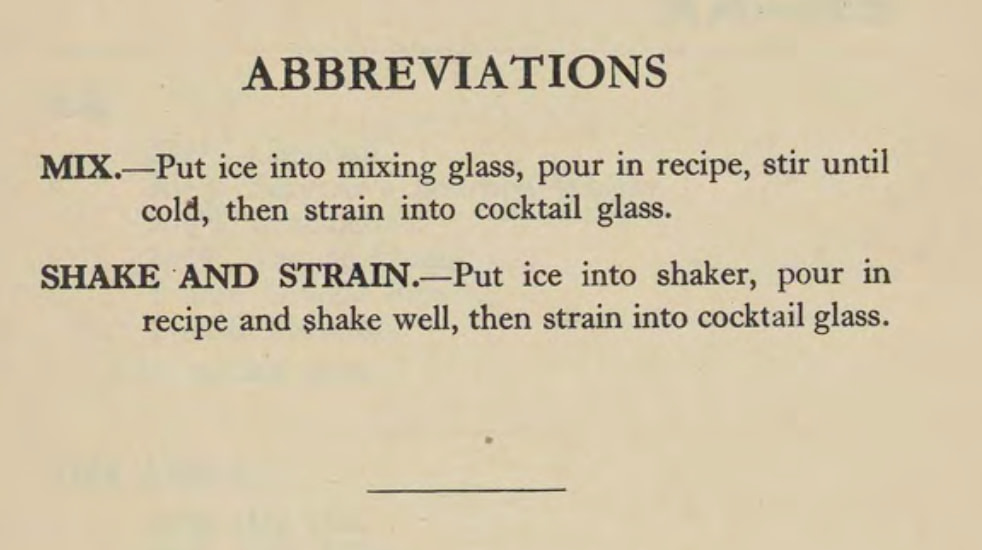
These are some exceptional suggestions and good note on the later UKBG books. I just remembered the first one didn’t have much beyond the recipes although I really liked the short note at the beginning to reduce jargon:

My German is quite rusty despite having spent (wasted…) 7 years in school not listening to the teacher. I am slowly relearning it and I conveniently have a custom AI pipeline built for Peche that helps in translating and structuring recipe PDFs so will review your list in detail.

Thank you!

1 Like

I love the list you are assembling here, would you be open to adding Amazon or other source links to find the books or ISBN where available, would be open to helping on either

Ok, you can add Eddie Clarke’s 1954 Practical Bar Management to the list. And probably his 1963 Shaking in the 60’s, which also contains quite a bit of prose on technique and intent.