Starting a UKBG thread with a simple question: did they have a reliable standard jigger size? (Their books are all expressed in percentages or fractions.) Gills? The jigger entry in the OCSC mentions the 1/3 gill (50ml) and 1/6 gill (25ml) jiggers, but I’m not sure how they might apply here.
1 Like
As you probably suspected, this is a can of worms.
For spirits, until it went metric Great Britain used the gill and its fractions as the basis of measurement. A gill was 5 imperial ounces, which is 142 ml or 4.8 US oz (the US oz was 1.04 Imperial oz). The standard set of measures you used to split it was a half-gill, a quarter-gill and a sixth of a gill.
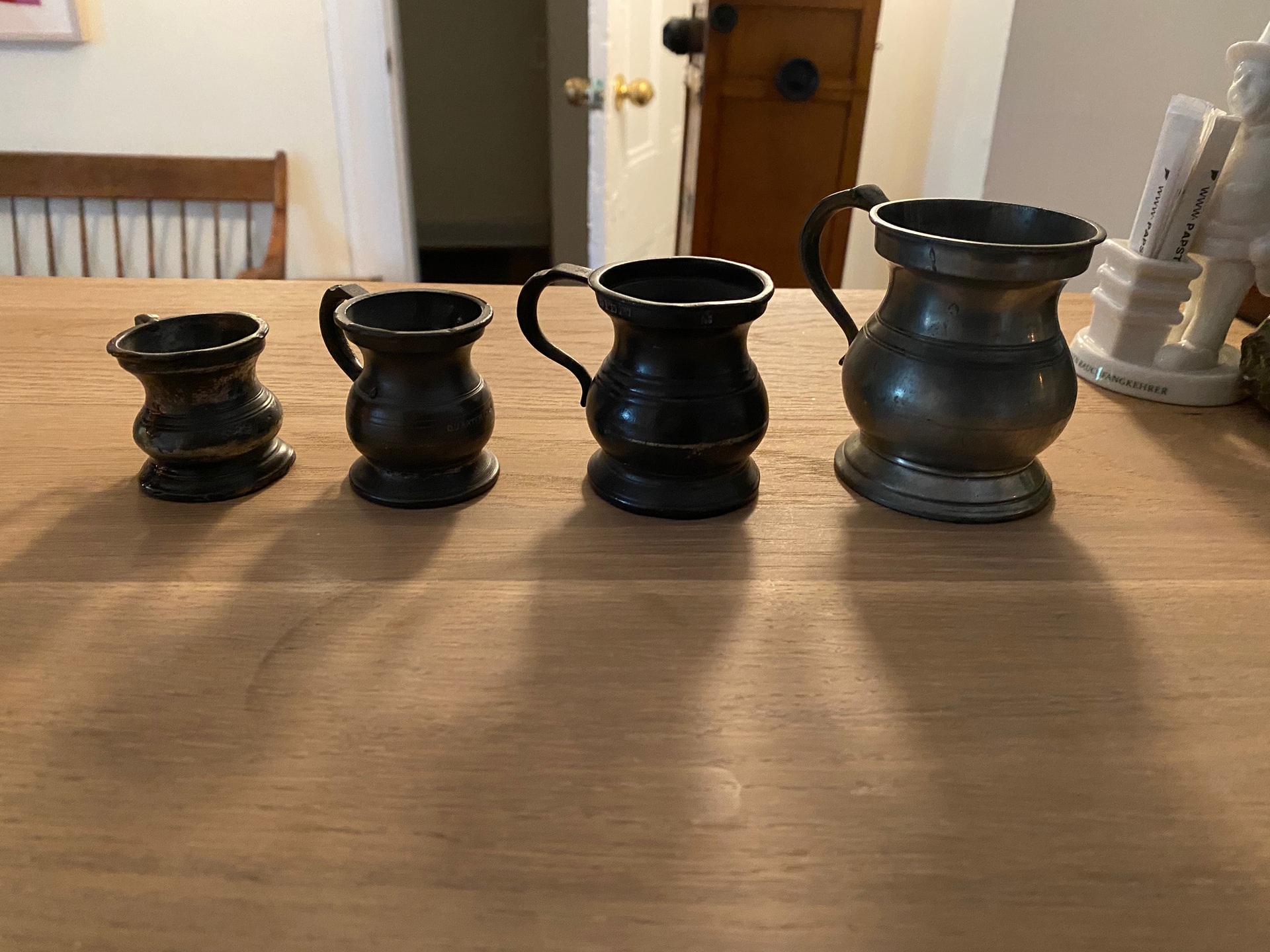
These measures were, as one can easily see, unhandy. So cocktail bars used their own measures, which were basically the same thing in terms of volumes, but handier and labeled differently. They were numbered in “outs.” The out number told you how meany of that measure went into a gill.
While there as a 2-out or half-gill “thimble measure,’ as the jiggers were called, I’ve never seen one. The largest I’ve seen in general use is the three-out jigger, which was of course a third of a gill or 1 2/3 imperial oz. That works out to 47.3 ml or 1.6 oz US (I’ve mostly rounded things to tenths of a ml, so the fractions might not come out evenly).
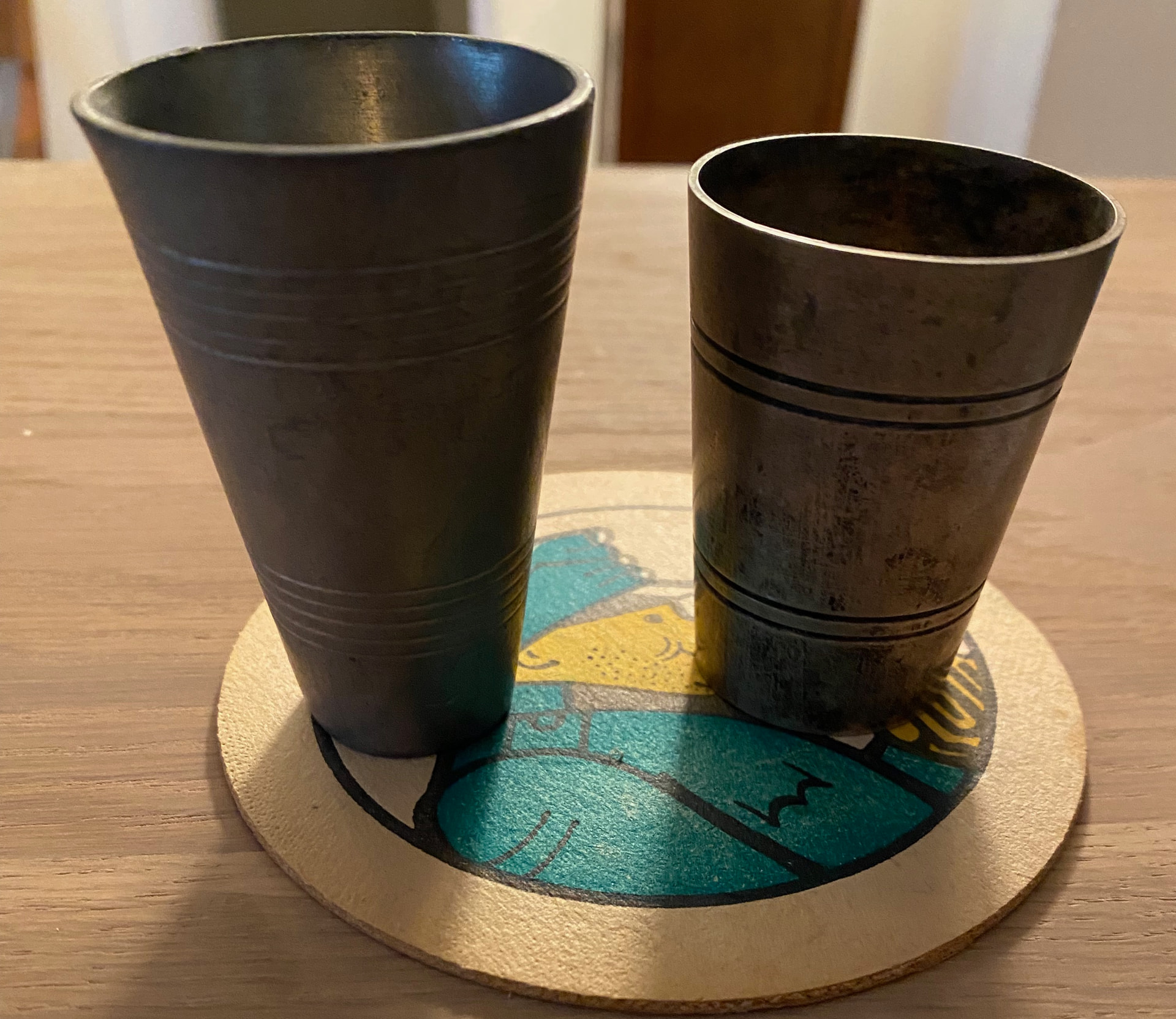
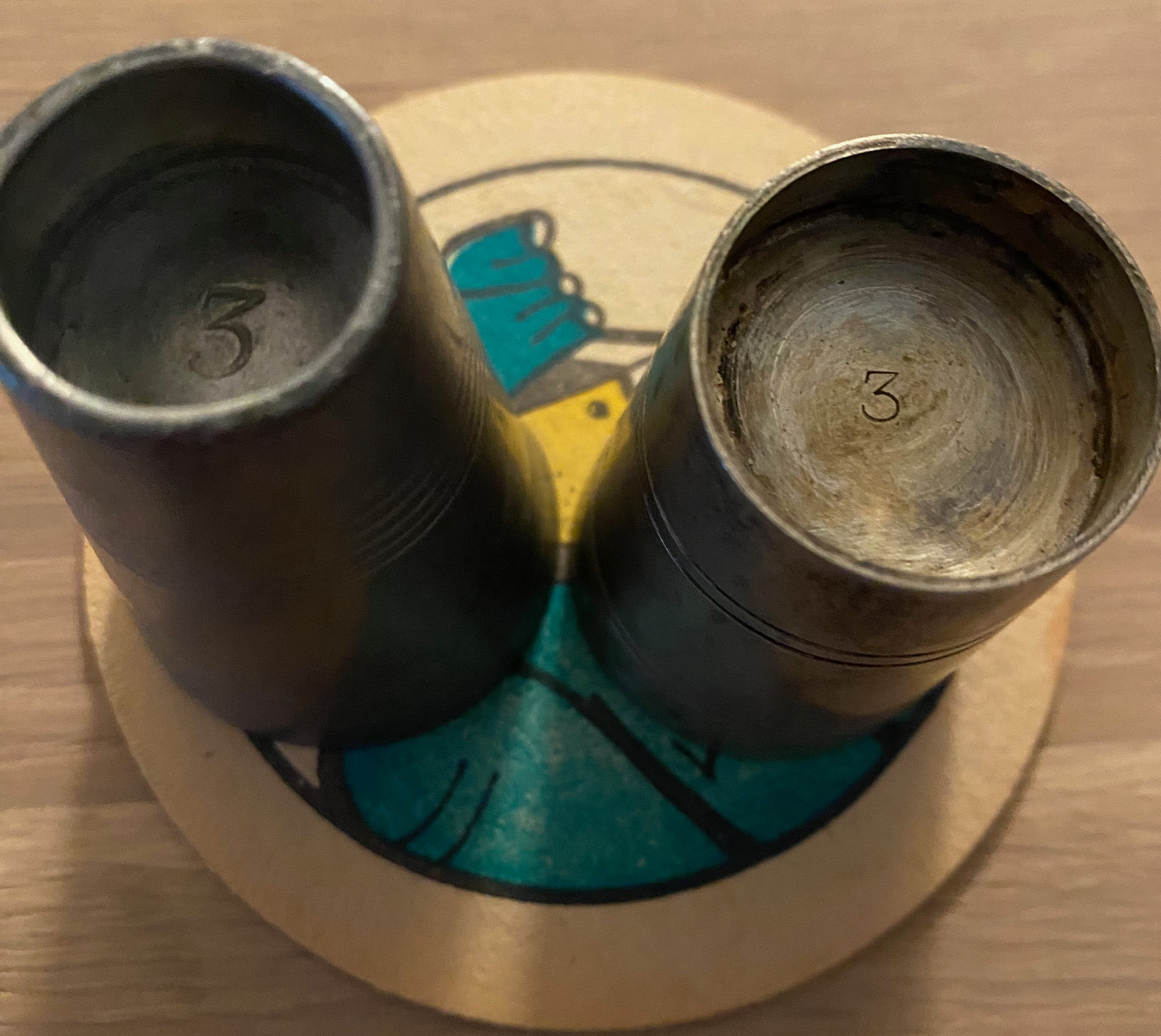
Then comes the quarter gill. By rights, this should be a “4-out,” but I’ve never actually seen one marked that. This holds 1 1/4 oz Imperial, or 35.5 ml (1.21 oz US).
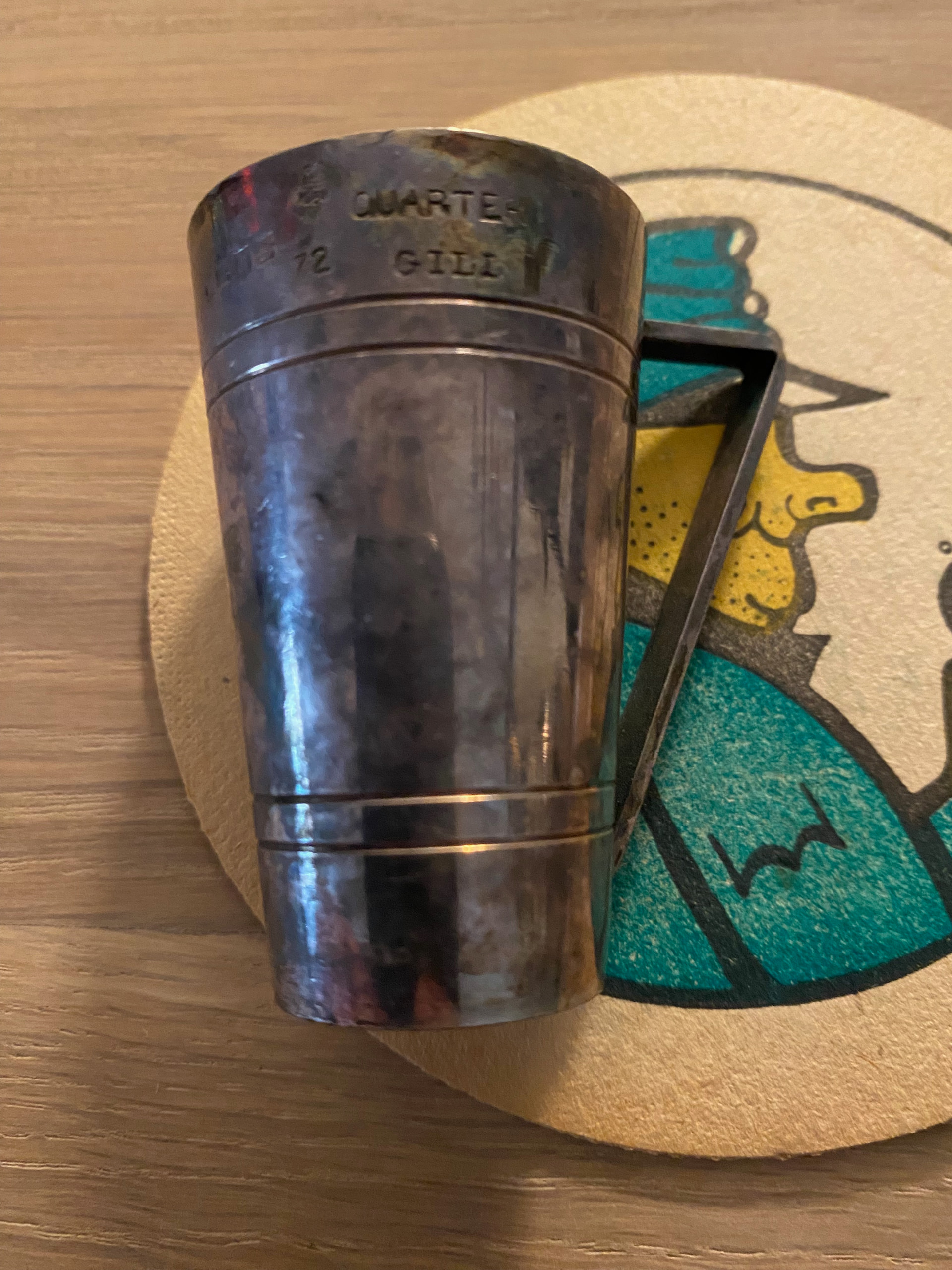
Then there’s a 5-out, which is of course one oz Imperial, for which see above. I’ve seen these but I don’t seem to have one, at least not handy. After that, there’s the 6-out, which is 5/6 oz Imperial, or 23.7 ml (.78 oz US). This is the smallest measure I know of, and judging by wear pattern in this well-used double 3-out/6-out jigger, its utility appears to have been limited. Postwar they added a mingy 7-out measure and a 2-oz (Imperial) “double 5-out,” which are pictured in the 1953 UKGB book, but I’ve never seen those, either. The 3, 4, 5 and 6-out measures, on the other hand, are quite common.
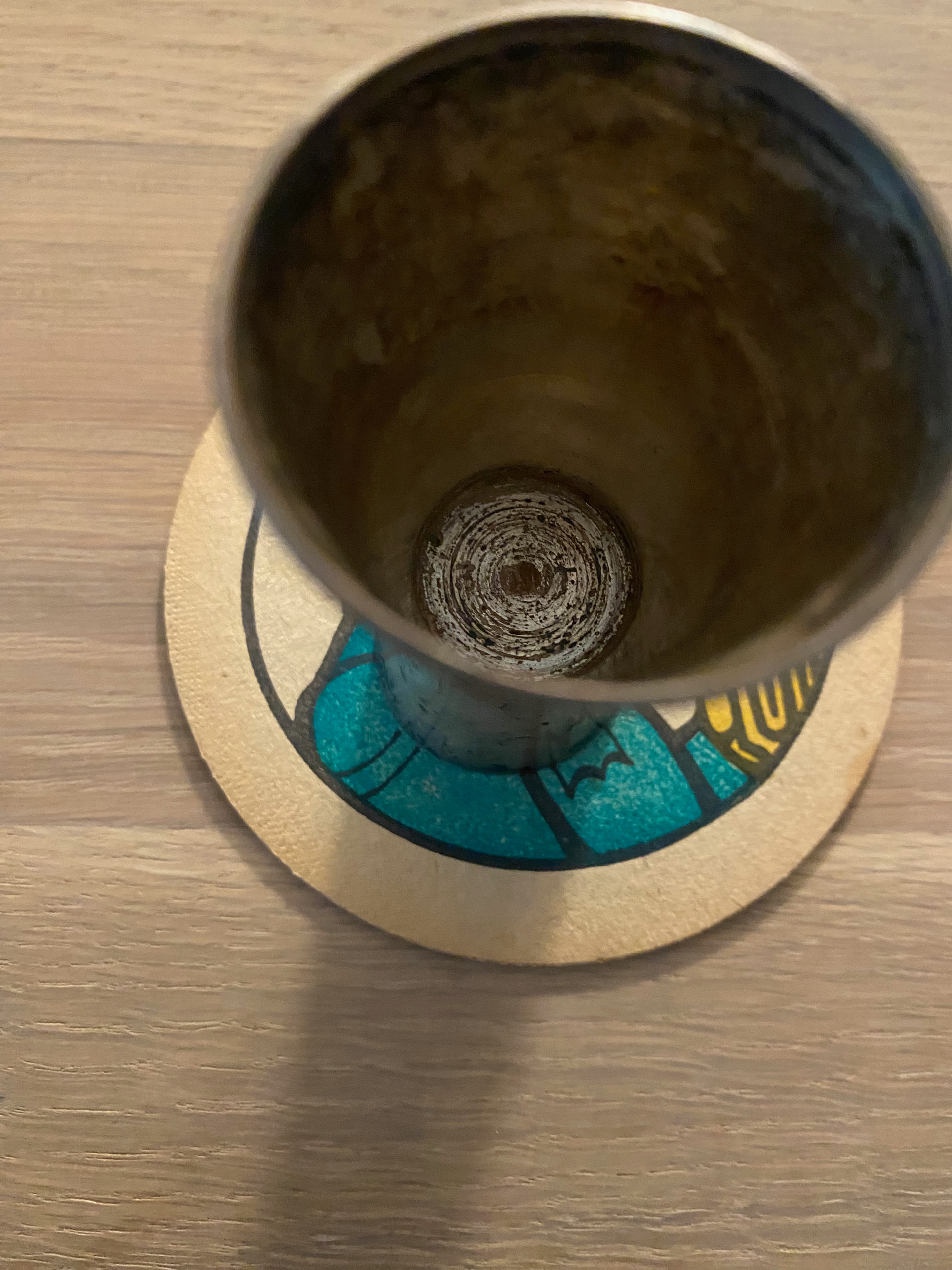
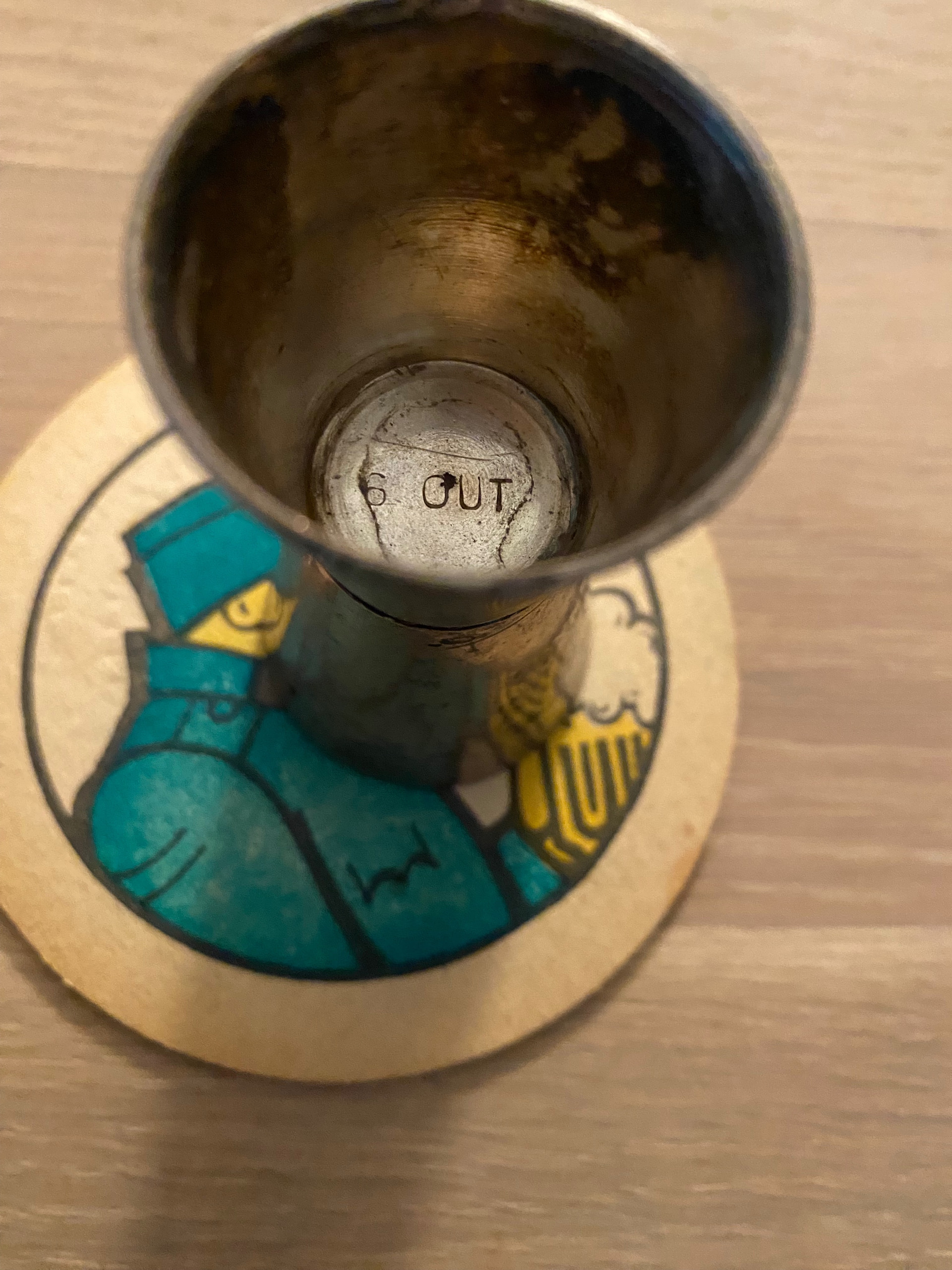
Then, of course, there are the Naval measures….
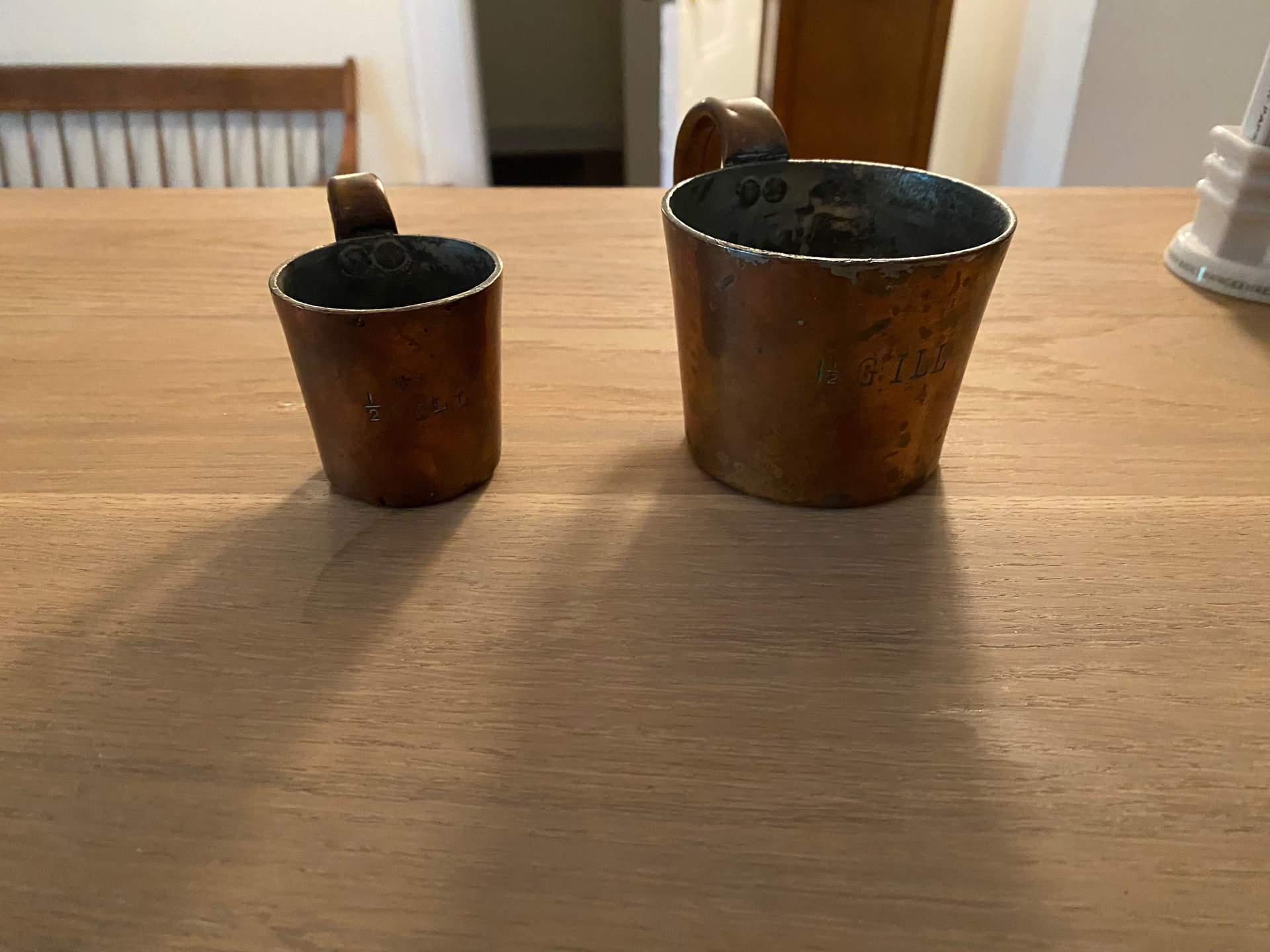
(That’s a half-gill, the daily rum ration in the 20th century, and a 1 1/2 gill, which is the amount of grog they made that rum into before they gave it to you.)
Edited to add some stuff I forgot.
8 Likes
Good grief! And big thanks for the amazing illustrated presentation!
Should I conclude that Craddock, Tarling, et al were using a 3-out (~1.6 fluid oz US) for these fractional/percentage-based recipes?
That would make this drink…
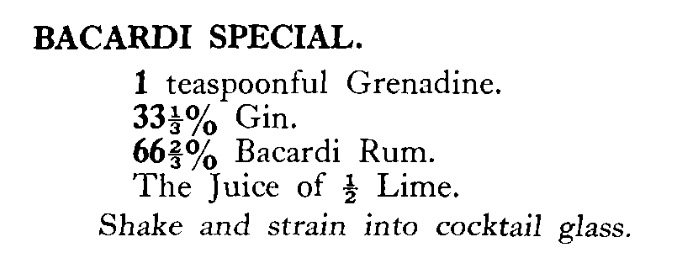
… into something like:
1 tsp grenadine
0.5 oz dry gin
1 oz Bacardi carta blanca
~0.5 oz lime juice
2 Likes
Now tell us about the coaster: is that Švejk?
I suspect they were building half-gill drinks, in which they’d use either a 2/3 — 1/3, 3-out + 6-out structure or a 1/2 — 1/2, 4-out + 4-out one (with further subdivision if needed). That’s what the jiggers would work best for.
2 Likes
It is indeed. Originally from the famous U Calicha (or however it’s spelled) in Prague, via an antique barn in Pennsylvania. Maybe a quarter each.
So
1 tsp grenadine
0.8 oz gin
1.6 oz rum
0.5 lime juice
…never felt I needed a 3/4 oz jigger until now.
2 Likes
That sounds just about right—say, .75 gin, 1.5 rum, .5 lime, barspoon grenadine. That should fit the pretty small glasses they used at the time.
2 Likes
So if I understand correctly:
If the recipe is expressed in 75%/50%/25% you reach for the quarter gill (4-out) jigger. Fill it full to get your 50%. Fill it halfway for your 25%. 75% is one-and-a-half jiggers. (The sporadic 12½ demands you fill it a quarter.)
If the recipe is expressed in thirds (33⅓/66⅔), then you reach for the 3-out to get your 66%, and then either fill that half-full for your 33% (alternately, grab a 6-out and fill that full).
If the recipe is expressed in 40%/20% then you grab the 5-out, if you’ve got one. I guess 40% is the full 5-out, and 20% is half the 5-out.
They were writing these recipes for themselves. I feel like it has to make for some kind of strong practical sense.
2 Likes
Here is a draft table how that shakes out, including rounded/adapted conventional US oz measurements. The most you need to round is 0.07 oz, which is probably well within the typical pouring variance of most mixologists.
| English jigger | recipe measurement | jigger fill | oz (exact) | oz (adapted) |
|---|---|---|---|---|
| Quarter Gill (“4-out”) |
75% | 1.5 | 1.8 | 1.75 |
| ^ | 50% | 1 | 1.2 | 1.25 |
| ^ | 25% | 0.5 | 0.6 | 2/3 |
| ^ | 12.5% | 0.25 | 0.4 | 1/3 |
| 3-out | 33.33% | 0.5 | 0.8 | 0.75 |
| ^ | 66.66% | 1 | 1.6 | 1.5 |
| 5-out | 40% | 1 | 0.96 | 1 |
| ^ | 20% | 0.5 | 0.48 | 0.5 |
Now, if the above is correct and you spot-check recipes in, say Approved Cocktails, a lot of these drinks seem like they are going to need at least a 5 to 5.5 oz (US) cocktail glass to not be filled to the brim or overflowing. Does such still qualify as “pretty small glasses”?
2 Likes
More to follow, but 2.4 oz (one-half Imperial gill) x 1.25 (a general rule of thumb for cocktail dilution) yields 3 oz. Leave a little headspace in the glass and you’re looking at a 3.5-4 oz glass, no?
Right. It seems I’m getting hung up on the recipes with extras (above 100%) and some of those specify “a medium glass” (or don’t specify a glass at all), but there are also some like this:
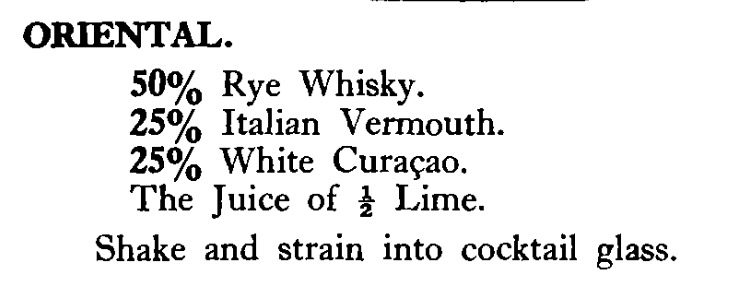
25% dilution does seem low to me for a stirred or shaken drink. Dave Arnold puts it around 40-50% for stirred drinks and 50-60% for shaken (ultimately depending on ABV, other factors), and that’s generally checked out for me in practice.
Ultimately, I just want to make sure I have a sound basis for representing these recipes with integrity (preferably finality since I’ve gotta check and correct several hundred recipes!).
I’ve been recipe testing out of the UKBG books over the last two weeks and the can of worms continues to squirm and writhe.
I pulled these images from the 1953 UKBG book:
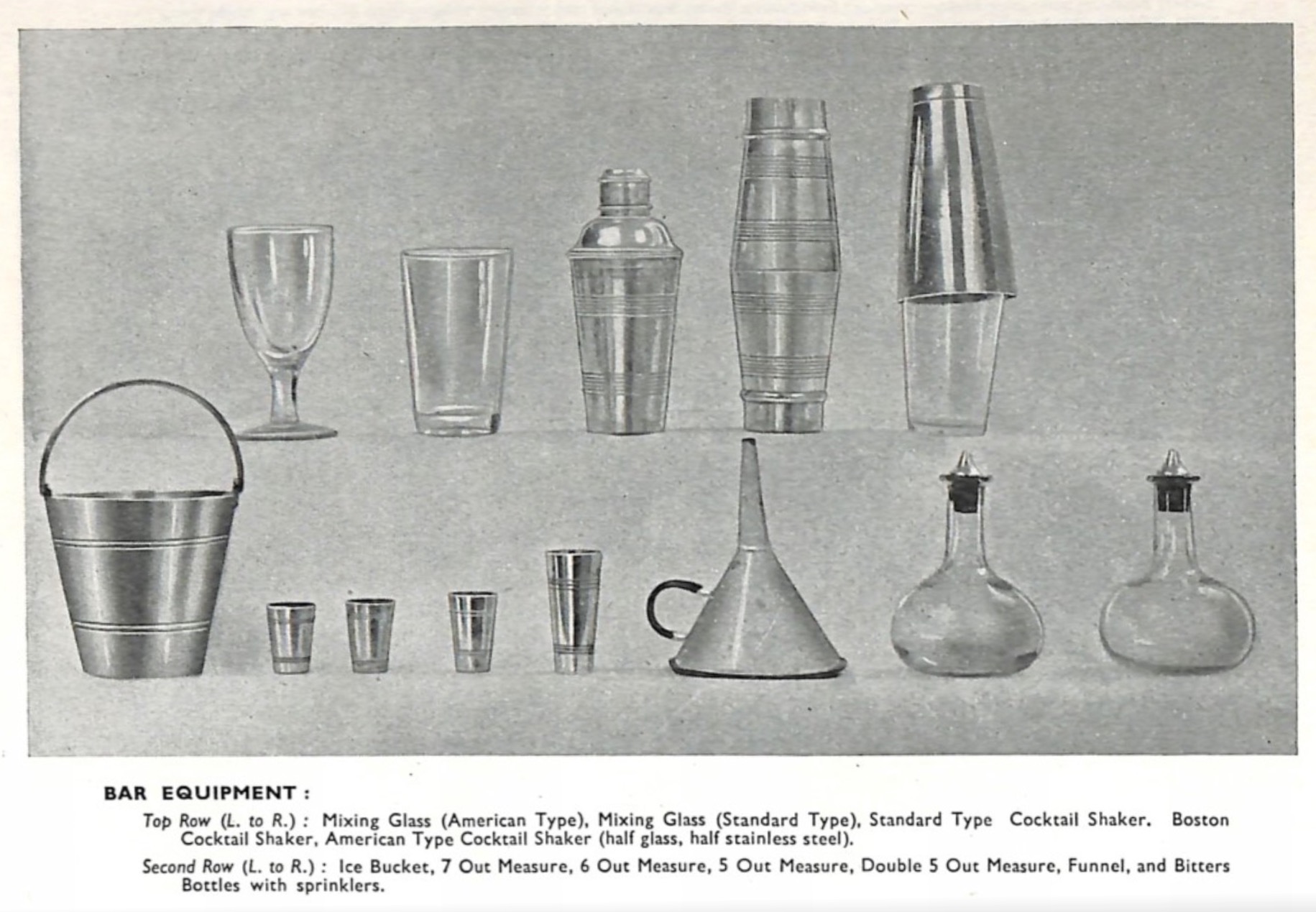
Here you see the lineup of “out” measures they seem to think are important at the time: 7 out, 6 out, 5 out, and double 5 out. Interestingly, no 3 out or “4 out”. There is no explanation in the book what to do with them.
And here is the page with the cocktail glasses:
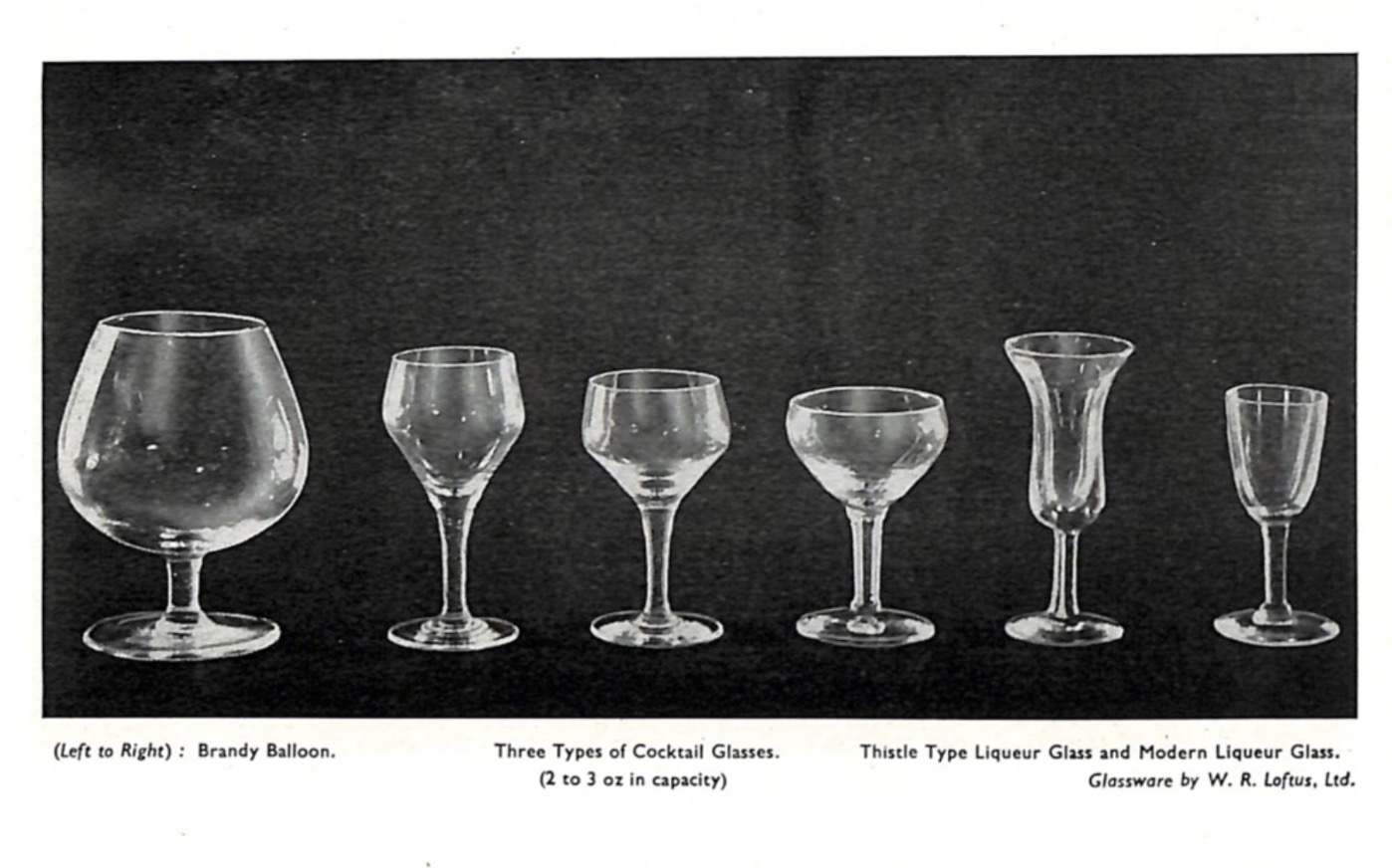
(The front matter got some updates in the 1960 UKBG edition, but they are of no substantial difference.)
A 3 oz drink is nice. A 2 oz drink is tiny. Perhaps they weren’t in the habit of measuring to the brim and these are actually slightly larger (2.25 oz to 3.25 oz)?
So, why the hell would they write recipes this way? I would expect it to be rational. They didn’t just do it once, they did it for decades across multiple books. If there’s going to be math, then you would adopt a system where the math was effortless to do in the head and/or it was just a practical question of filling a standard measuring cup the specified percentage or fraction. No?
That “double 5 out jigger” is ostensibly a 2 oz jigger. If you rely entirely on that ~2 oz jigger, and fill it the percentages/fractions specified in these books, I am finding the drinks will generally fit in a 2.5–3.25 oz cocktail glass. It does depend on how much dilution you are getting, and there are some recipes (like that Bacardi Special, above) that ain’t gonna fit in a 3 oz cocktail glass no way no how. Probably not even a 3.5 oz. Careless editing? Did they just stop pouring when the glass was full and waste what remained?
Here is an anecdotal example:
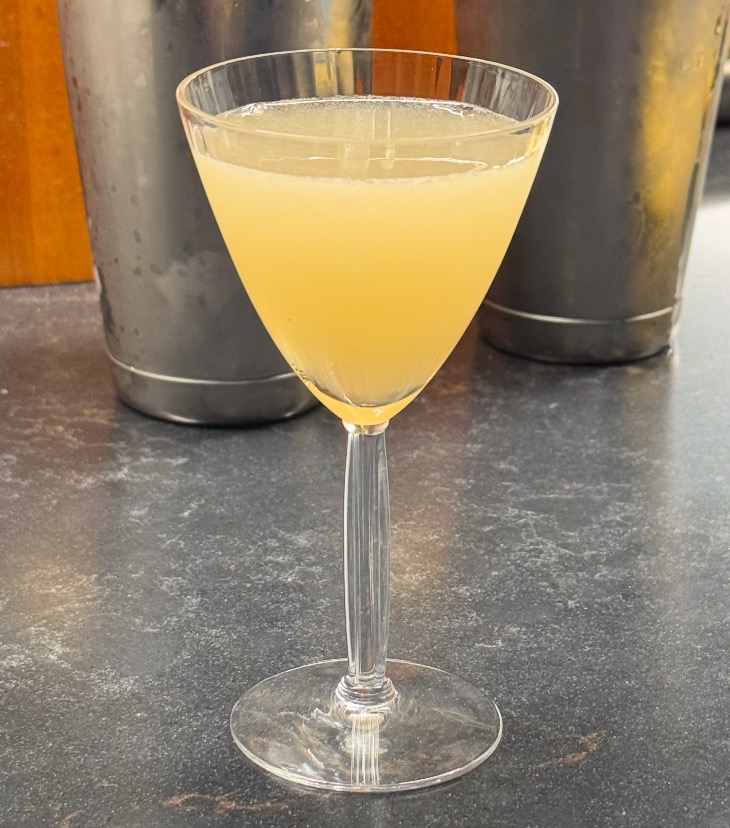
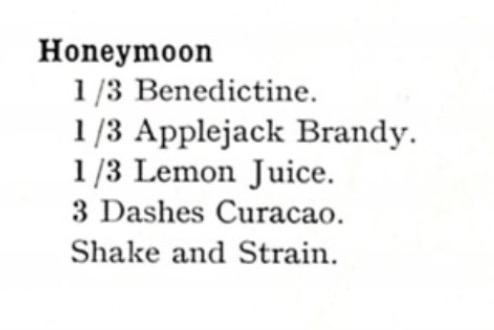
So, that’s 2/3 oz of each of the main ingredients plus a smidge of curaçao. So just slightly more than 2 US fluid oz going in. After shaking (quickly, with 0ºF home ice, not commercial “shit ice”), that was just slightly more than 2.5 oz of liquid in a 3.25 US oz cocktail glass. Yes, it would fit in a 3 oz glass, I just don’t have one. I suspect it would either be at the brim or overflowing in a 2.5 oz glass.
2 Likes